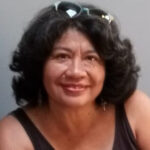
Awarded by the University of Talca (Chile), the prestigious 2025 Premio Iberoamericano de Letras José Donoso recognizes Peruvian writer Carmen Ollé as one of the region’s most important authors. The prize highlights her long literary career and “the artistic, experimental, and political value of her poetry, fiction, and essays, marked by an embodied and nomadic writing style.”
Sylvia Miranda: What was it like to receive the Premio Iberoamericano de Letras José Donoso?
Carmen Ollé: I experienced this honor in two different ways: it gave me great satisfaction to know that several of my books—works that are not always widely known in Peru—had been read so attentively, especially in light of the details highlighted by international jury members Fernanda Moraga García, Rodrigo Cánovas Emhart, María Lucía Puppo, and Meri Torras. On the other hand, I couldn’t help but think while traveling to receive this tremendous honor about how, at that very moment, so many people were being massacred in Gaza, the West Bank, Lebanon, Iran, Sudan, and other parts of the world. And in Peru, hitmen from criminal organizations gun down drivers and passengers when transportation companies fail to make their extortion payments. On top of this, there is the racism, abuse, and murder of Latin American immigrants in the United States by ICE and the rise of fascism in many European and Latin American countries. My happiness was overshadowed by these tragedies that, as people say, we now witness in real time.
S.M.: The prize honors your complete body of work, which—as we know—is characterized by its transgressive nature and by the wide range of genres you explore, often pushing beyond their traditional boundaries. The importance of Noches de adrenalina (1981) has long been emphasized since it was a pioneering work in its exploration of the body and in its search for women’s cultural and political identity within society, all through a new, direct language free of taboos. Do you think this perspective, this spirit, played a role in your receiving the prize?
C.O.: Most likely. In April 2025, I was invited to the Poetry Festival at the Buenos Aires International Book Fair. Around that time, the publisher Nebliplateada launched a new edition of Noches de adrenalina y otros poemas parisinos at the fair. At the same time, another edition of Noches de adrenalina was being released by the Editorial Universidad de Santiago de Chile. I remember my first collection of poetry received very positive press in Buenos Aires, and many critics highlighted the very characteristics you mention. So yes, I think it’s possible that the newspaper reviews and various interviews caught the attention of Claire Mercier, coordinator of the Premio José Donoso at the University of Talca.
S.M.: Do you think there is currently an international interest in Peruvian literature written by women?
C.O.: Overall, the interest tends to focus on other women writers—those published by major transnational publishing houses in Europe or the United States. Within Latin America, Argentine and Mexican women writers tend to stand out most prominently; in earlier decades, there was greater attention paid to Cuban women writers living in exile. As for us—Peruvian women writers—the issue is that we are rendered invisible by the veil of bad news surrounding Peru: the fact that there have been eight presidents in ten years, that some former presidents are now in prison, the rampant corruption, the enormous social inequality, along with other longstanding issues like discrimination and Lima-centric centralism.
S.M.: How was the news of your receiving the prize taken within the Peruvian literary world?
C.O.: It was warmly received among my friends, students, and readers. Above all, I was sent many messages of congratulations on social media, and the news was covered in local newspapers. A journalist from La República wrote the following about the award: “This international prize, it must be said, erases the official pettiness surrounding Destino: vagabunda, a book that had everything it needed to win the Premio Nacional de Literatura de Ensayo, but did not because of the narrow-mindedness of the jury. In truth, a prize of such prestige, awarded by the University of Talca, wipes away all such pettiness. The best way to celebrate this well-deserved achievement of Ollé’s is simply to (re)read her books. Carmen Ollé is immense and fierce.”
S.M.: How do you view the work of Peruvian women writers today? What does this recognition represent for them as well?
C.O.: I am familiar with the work of a few poets, short story writers, and novelists. Among the youngest generation, there is a particularly combative feminist tone; many of these voices also reclaim ancestral memory in their poetry. Others focus on how to endure illness and pain. Themes such as parent-child relationships and family conflict can be found in short fiction, while novels tend to address more recent historical subjects, such as the internal war between Sendero Luminoso and the Peruvian state. In other words, today’s Peruvian women writers work in a decentralized way and from different “trenches”: the intimate, the political, the social, the historical, mental health, maternity, and so on.
As for what the Premio José Donoso might represent for them, that question belongs more to the realm of emotion and speculation. For that matter, I wonder what Mario Vargas Llosa’s Nobel Prize represented for Peruvian writers. The truth is that I believe every award is unique and untransferable.
S.M.: In your memoir Destino: Vagabunda (Peisa, 2023), you discuss your literary preferences, including works and authors marked by exile, whether from the Russian Revolution or World War II. In today’s world, where exile continues to multiply due to wars of many kinds and increasingly complex social and environmental causes, how do you imagine this new literature of exile?
C.O.: I am still waiting for a body of fiction that truly addresses the urgent issue of Venezuelan migration in the region, especially in Peru. So far, all we have are sensationalist news reports about the life, suffering, and death of foreigners in Lima and other Peruvian cities. Nor is there a body of literature about the return migration that took place during the COVID-19 pandemic. No one has really investigated what happened to the thousands of Peruvians who had left their hometowns in the Andes or the Amazon to work in Lima and who, after many years, were forced to return after losing their homes and jobs and finding themselves out on the street. It is a kind of double exile, outward and back again, that reminds me of Anton Chekhov’s short novel Peasants (1897). I suspect something similar must be happening with Latin Americans deported from the United States by ICE to their countries of origin, a process that entails a kind of double adaptation, especially in cases where they no longer speak their native language.
On the other hand, there are stories—though they are not widely disseminated—about victims of the internal war who fled war zones in cities such as Ayacucho, Huancavelica, and Apurímac. By contrast, several novels by Peruvian students who traveled to study at American universities—either on scholarships or through their own means—recount their trials and hardships in hostile and racist environments. These are works by intellectuals, professors, and storytellers who resettled across various university campuses in the United States toward the end of the twentieth century.
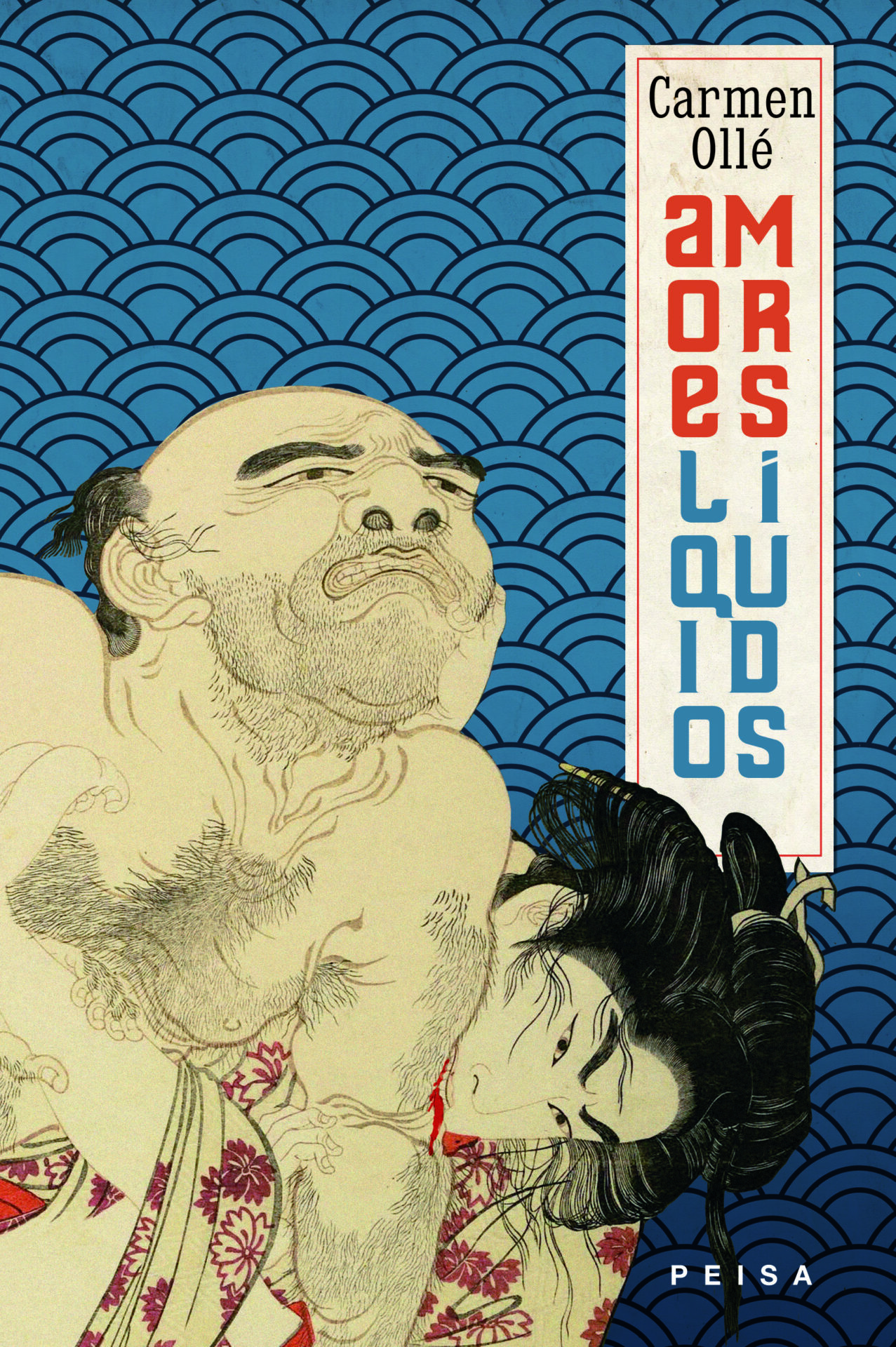 Amores líquidos Amores líquidos |
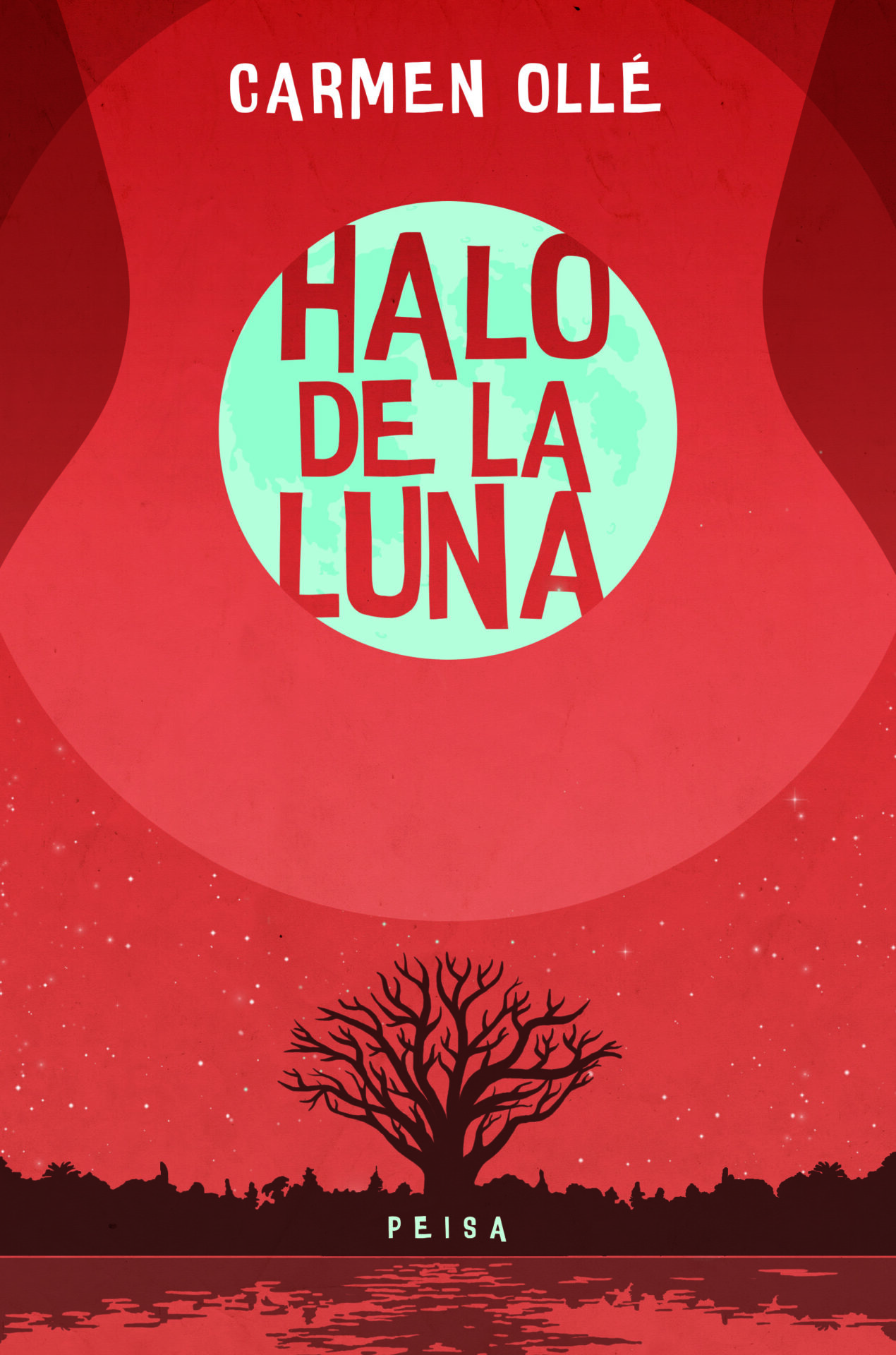 Halo de la luna Halo de la luna |
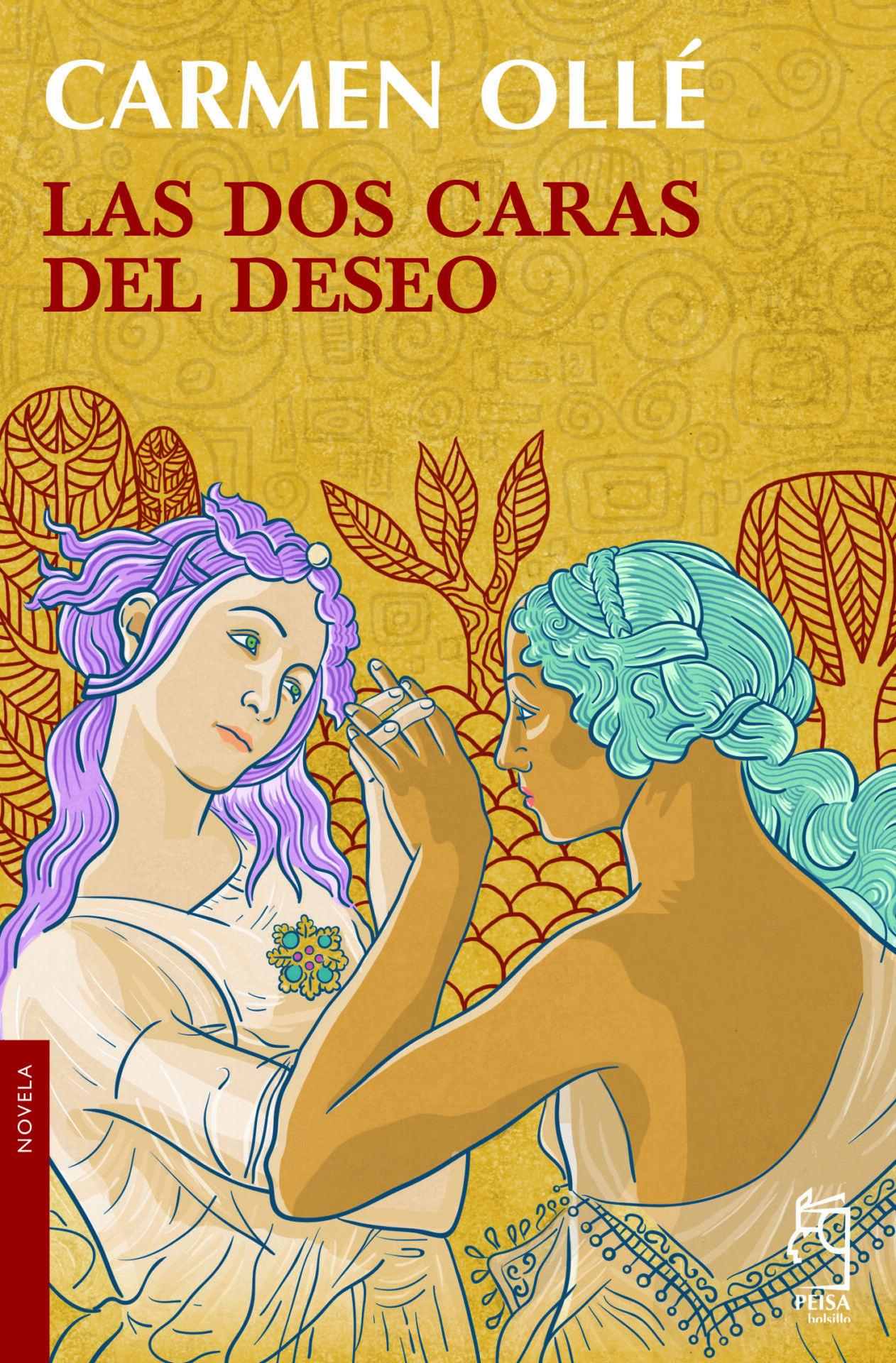 Las dos caras del deseo Las dos caras del deseo |
Covers of Amores líquidos, Halo de la luna, and Las dos caras del deseo by Carmen Ollé, published by Grupo Editorial Peisa.
S.M.: In your work, there is a consistent critique of Peruvian society, whose complexities and problems have only intensified over time, yet you also express a deep fascination with the possibilities generated by culture. How do you envision the Peru of the future? What would you like it to be like? What is the Peru you carry within you?
C.O.: I am aware that the country has changed since I first became old enough to see it clearly. When I was very young, I lived in a large house in Lince, surrounded by overcrowded tenements and half-finished homes inhabited by poor tenants, but also by the residences of wealthy people. It was a strange kind of neighborhood: districts that were still in the process of becoming fully urbanized. Vacation trips with my mother to the Andes, though they were technically tourist trips, were overshadowed by rural poverty: drunk men lying in the streets, children chasing after us for tips, haciendas surrounded by huts, widespread illiteracy. Even today there are elderly women who cannot read or write. Under Velasco’s dictatorship, something changed: greater importance was given to the cultures of Peru’s ancestral peoples, and these people became more conscious of their worth as Peruvians. But poverty did not disappear, not even after agrarian reform. What it did bring to an end was an era—one of wealthy landowners exploiting villagers—and this eventually gave rise, in the 1980s, to the insurgencies of Sendero and the Túpac Amaru Revolutionary Movement. This was another historical moment that transformed Peru socially, politically, and culturally, leaving some 70,000 dead in what was called a “fight against terrorism,” but was in reality a domestic war between the Peruvian state and those far-left insurgent groups. In the twenty-first century, criminal organizations, institutional corruption, and corrupt politicians—forces that continue to chip away at Peru’s fragile democracy—have effectively hijacked the country, and at times it seems there is no way out. I hope, someday, I can still hold on to hope that there is.
S.M.: Looking back, how do you see the path you’ve traveled?
C.O.: It has been long, strange, and mysterious. There were—and still are—many Carmens along that path, both physically and spiritually. But one thing has not changed for me: I never accepted, nor will I ever accept, authoritarianism, torture, cruelty toward animals, genocide, greed, betrayal, disinterest in science, lack of curiosity, and indifference. All of that is, unfortunately, present in many hearts throughout this world.
S.M.: What dream would you still like to fulfill, with or without the possibilities this prize may offer you?
C.O.: I longed to travel to remote places, though now I know that such places no longer exist in the way I imagined them when I was a teenager. Globalization, social media, and smartphones have robbed us of the mystery of the arcane, of the hidden. Eastern Europe always fascinated me—the Carpathians, Transylvania, cities like Budapest, Warsaw, Saint Petersburg—but how can one travel to these dreamlike places when they are governed by fascism or trapped in perpetual war? The dream will remain just that: something to be lived through the imagination, or through art and literature. And to travel through those places through the eyes of nineteenth-century adventurers and dreamers—Conrad, Rimbaud, and many European women explorers such as Alexandrine Tinné, the Dutch explorer who attempted to cross the Sahara Desert.
S.M.: What books are currently at your bedside?
C.O.: On my nightstand, I have Euripides and His Age by Gilbert Murray from the Breviarios collection—a very old book, but one whose rereading is crucial for understanding the present. And I have just finished—though I will reread it anyway, because it has helped me understand what I myself am writing—The Year of Magical Thinking by Joan Didion. Also on my nightstand, and never removed from it, is a comic from a 1966 issue of Novaro, Vidas Ilustres: “The Love of Dante Alighieri,” along with a booklet on Amedeo Modigliani.
S.M.: Are you working on any new literary projects?
C.O.: I am not sure whether I have finished—though it seems that I have—a brief requiem in memory of a passenger who was shot and killed by a hitman carrying out an extortion scheme after attempting to shoot the driver of a combi (bus). I knew this young man, and before the tragedy I had already drawn inspiration from him to write three stories. This requiem is also a tribute to the death of my muse and to the many innocent passengers who have lost their lives.
S.M.: What would you say to a young person beginning a literary path today?
C.O.: Not to think about success or failure. Simply to write and to read everything, not just literature. And not to forget the Latin maxim attributed to the Roman emperor Augustus: festina lente.
Translated by Iyan Smith Williams
Buy books by the authors and translators featured in this issue on our Bookshop page!