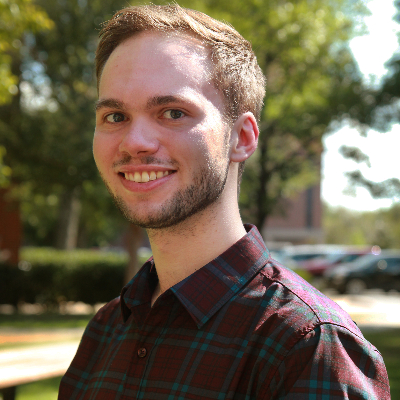
Colombian essayist, novelist, and poet Darío Jaramillo Agudelo belongs to the “disillusioned generation.” He served as deputy director of cultural affairs at the Banco de la República for twenty-two years and received Colombia’s Premio Nacional de Poesía in 2017 and the Premio Internacional de Poesía Federico García Lorca in 2018. Casa Silva has also recognized him for what it deemed the finest love verse in Colombian poetry: “Ese otro que también me habita” (“That other who also inhabits me”), from his “Poema de amor N.1.” Here we discuss his work, writing love poetry, and the crónica as a voice for an eccentric Latin America.
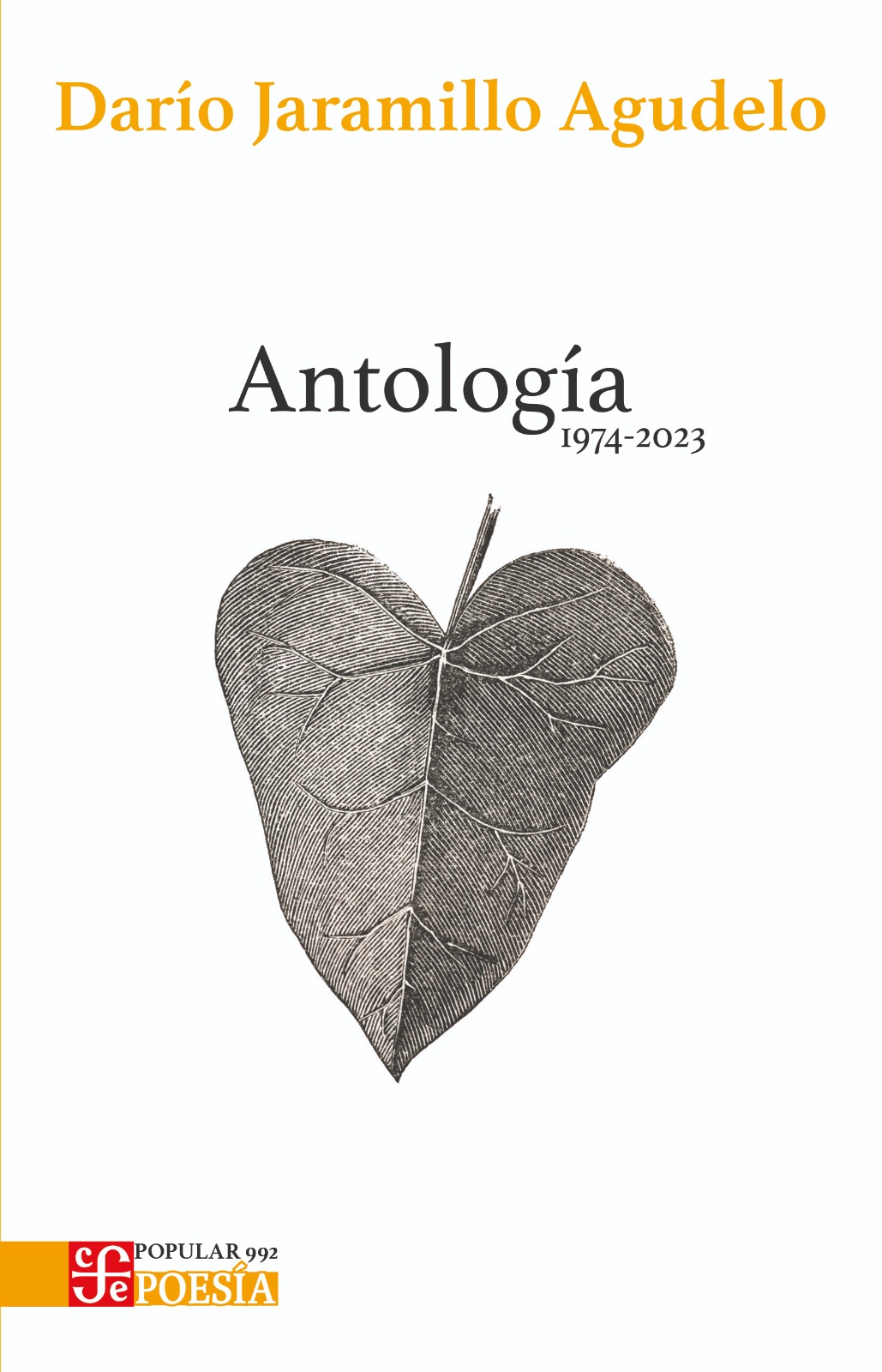
Natalia Consuegra: Reading your Antología (1974-2023), published by the Fondo de Cultura Económica, I found myself thinking about the renewal of love poetry in Colombia and across Latin America. Do you think love poetry is being written differently today?
Darío Jaramillo Agudelo: I think poetry in general has changed. Fortunately, it has lost much of its stiffness, affectation, and declamatory solemnity. Overall, it has become more conversational, and this is not limited to love poetry. I think the entire poetic corpus tends in that direction, despite all the risks involved, because it once seemed easier than it actually is. Good conversational poetry is better, though there is far less of the good kind than the bad. There are many attempts and very few triumphs, but that has always been the case. I think there are many excellent poets writing today and many excellent love poems, just as there are excellent poems on every subject. In Colombia in particular, there are beautiful love poems. As we speak, for example, I am thinking about María Gómez Lara. And she is not the only one; there are many poets who have ventured into the genre.
N.C.: And who have managed to eat the poem cold, as you once put it.
D.J.A.: Writing a poem unfolds in two stages. There is the hot stage: you are in love, and you write accordingly—you unleash a kind of verbal spasm. The second stage comes sometime later: the cold stage. I always quote Jaime Jaramillo Escobar, who said, “A good poem is eaten cold.” This is where the workshop begins. If you are going to write a love poem, the first thing you need for that initial stage is to be in love, which itself is a contradiction: when you are in love, your verbal faculties are not at their best because you are completely stupefied by infatuation. So the workshopping process—especially with love poems—is necessarily more intense, more violent; it has to be far more ruthless.
N.C.: The idea of revisiting a poem when it has had time to rest and settle is fascinating. How do you approach a poem in its cold stage? Do you read it differently?
D.J.A.: Sometimes I think of it this way: you have to read it as though your worst enemy had written it. Kick it around, be ruthless with it—and it never works the first time. You have to be a genius for a poem to come out right on the first try. The first stage simply leaves the poem sitting there; the second stage—the cold one—is painful and long, and perhaps not just a single stage. I work on it, then let it rest again to see whether it survives or not. You have to be ruthless.
N.C.: You claim that poems—even the best ones, by Pablo Neruda or Raúl R. Salinas—gradually lose their color. How can you tell when a poem is no longer what it once was in its moment of glory?
D.J.A.: Let me tell you about my own experience. I write in notebooks. Every so often, I go back to one from last year or the year before, come across a few lines, and begin working on them. In other words, I transcribe the poem—sometimes on the computer, though generally I prefer doing that work by hand. What remains after the transcription is something still unfinished. There comes a moment when you have nothing else to do to a poem, but you still do not know whether it truly works. So, you put it away again and return to it in a month, three weeks, or even a year later. Then you look at the result and think, “Well, this is how it turned out; there is nothing more I can do to it.” In my case, the proportion between the poems that remain in this stage and the ones I actually publish is enormous: I publish one out of every ten or twenty. The rest I discard completely. In the case of my 1986 book Poemas de amor, I came across some drafts I had originally left out of the collection and decided to publish three or four of them forty years later. I had never touched them again, and there are surely many more that I never will.
N.C.: In “Instrucciones para escribir un poema,” you write: “At this point, we already have a sonnet, which is precisely why it is better to stop here.” How do you know when you have reached that moment in writing when it is time to stop?
D.J.A.: When you cannot go any further and there is nothing left to do. You know by instinct; it is an arbitrary and probably imperfect process. If I feel I can no longer give anything more of myself to a text, I leave it there and see whether it survives. I do not feel that I am writing the Divine Comedy; I am, let’s say, a modest craftsman. So I see whether my poems more or less work, as far as I myself can take them, and I leave them there, without too much satisfaction or too much pride in having written them. There is another step, once you have gone through all of that, and that is having a third person read for you. I have had several people who have helped me enormously. The person who has helped me the most is my editor—bless him—Manuel Borrás, director and poetry editor at Pre-Textos. He has the honesty to tell me things plainly. At that stage, when one finally dares to think the poems might be publishable, that third person becomes especially important.
N.C.: Reading the anthology, one comes across themes that run throughout your work, and there is one in particular that caught my attention: the constant tension between language and silence. You speak of words that can kill or explode, of “skinning each syllable,” of “things that cannot be said,” of the struggle to find words in the face of silence, and of the notion that sometimes it is better to remain silent.
D.J.A.: The best words are the ones that resemble silence. It is true—the contrast exists. I think we simply talk too much. Maybe that is why I cough so much; it helps me avoid talking. The music one seeks in poetry, now that poems are no longer read aloud but silently, is precisely the music of silence. Very often poems never reach, for the general reader, the stage of being read out loud. In workshop settings, of course, one does read them aloud to hear how they sound, but generally speaking, the fate of today’s poems is to be read in silence. So there are words, there is text, but there is silence too.
N.C.: How does the reader relate to this idea of silence? Sometimes, readers may expect an abundance of words, for the poet to tell them so many things.
D.J.A.: Silence is always best. And perhaps what happens is that poems change when we change, because the poem is recreated when the reader reads it. When you read a poem I wrote years ago, you may connect with it—or you may not. What is most curious is that you can connect deeply with a poem, love it very much, and then, two or three months later, read it again and no longer like it at all. Or vice versa: you read it once and it does nothing for you, then you return to it later and it becomes a revelation. There are many internal elements of the text and many external elements that belong to the reader, all interacting so that, in the end, the feeling—the emotion—of the poem emerges.
N.C.: Some speak of the aesthetic or even ethical intentions of the poet. How does that distinction work in your case?
D.J.A.: Frankly, I am incapable of distinguishing between them. I believe the aim of the poem is aesthetic, and within that the entire moral intention is already implicit; if one fails, the other fails as well, and the two become inseparable. I cannot make the distinction.
N.C.: Turning to your 2012 anthology of Latin American crónica, how is the genre narrating our region today?
D.J.A.: What I like most about the title of that anthology is the phrase crónica actual (“current crónica”). I am very pleased that its sense of immediacy has not been lost; that anthology is still alive. The truth is that several things have happened. When I put together that anthology, the genre was still establishing itself, but it was not yet fully consolidated. Still, the stars were already there: Juan Villoro, Leila Guerriero, Alberto Salcedo Ramos—the greats who continue to reign. To me, Leila seems to be a better writer every time I read her, and the same is true of Salcedo. At the time I compiled that anthology, it became accepted that the crónica belonged to literature, though at first this seemed like a strange idea. Today it feels natural to think of writers of crónica as literary writers and not simply journalists or reporters. Something else has happened as well: when I was compiling the anthology, crónica tended to venture into territories no one had previously explored—strange situations, strange figures. Perhaps, now, nothing seems strange to us anymore. And, well, today there are many new names, many very talented people.
N.C.: A few decades ago, very little crónica was published—far less than novels or poetry.
D.J.A.: With very few exceptions, such as the books of Germán Castro Caycedo, there were simply no books of crónica being published. Now, there are countless ones. And more than that: today, for example, one can hardly describe Héctor Abad Faciolince as a fiction writer; his most important book is a crónica about his father. There are now many books devoted to a single subject, much like what Germán did with El Karina; today that is very common. Although very few magazines dedicated to crónica remain, newspapers no longer consider it excessive to publish an entire crónica in two installments; that simply did not happen back then. At the time, one had to write for El Malpensante, Gatopardo, or one of the three or four specialized magazines that existed in Latin America. Today it is an established genre that enjoys academic respect. In fact, part of the reason that anthology has endured is because it is widely used in universities, which suggests that the genre is now being studied seriously in schools of journalism.
N.C.: Does the average reader also gravitate toward crónica?
D.J.A.: I think so—very much so. People read Martín Caparrós and Salcedo Ramos; both are bookstore successes that everybody reads. And Leila’s books—well, needless to say. People no longer speak of journalists who write crónica; they are called writers now, and they are established as such. There are also new names that have emerged, like this young Cuban writer, Carlos Manuel Álvarez… that guy has a gift from God; his crónicas are tough and extraordinarily crafted. The same goes for Juan Villoro, a journalist who writes crónica and who is now considered one of the greatest Mexican writers. I think they have all been accepted and, in a sense, consecrated.
N.C.: What is the greatest strength of Latin American crónica, and perhaps the factor that makes it distinctive?
D.J.A.: We are a very impassioned society; we have many strange things that can be told, though none of this is entirely original. I think if one were to erase names like Truman Capote from literary history—to give the clearest example—Latin American crónica simply would not exist. It primarily borrowed from crónica written in other languages, in other contexts and circumstances, and it became distinctly Latin American because of how unusual this region is, because of all the bizarre things that happen here.
N.C.: You even include a crónica writer in your novel Panacea, for example.
D.J.A.: This is what happened with that novel: I wrote it fifteen years ago and had completely forgotten about it until one day, while going through some files, I came across something titled “Panacea.” I thought, “What could this be?” I did not remember the novel at all, and I am still not entirely sure what that earlier Darío was thinking when he wrote it. Structurally, the book operates on exactly those two planes: the protagonist speaking about himself as a lawyer, and at the same time everything happening in the world around him as a plant emerges that changes everyone’s life. At heart, that crónica within the novel is an enormous joke. I think of Panacea as, above all else, a humorous book whose goal is to poke fun at the very strange species to which we belong.