Hablemos, escritoras: Episode 561
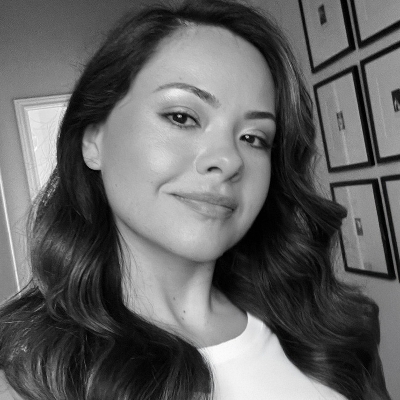
The name of Chilean playwright, actress, writer, and screenwriter Nona Fernández is Patricia Paola Fernández Silanes. She was born in Santiago, Chile, on June 23, 1971, and trained in theater at the Universidad Católica. Among her best-known plays are El taller (2012) and Liceo de niñas (2016), produced and premiered by La Pieza Oscura, the company she leads with Marcelo Leonart. She has also written various scripts for television series. Her novel Mapocho received the Santiago Municipal Literature Prize, while La dimensión desconocida won the Sor Juana Inés de la Cruz Prize in 2017. The English translation of her novel Space Invaders was a finalist for the 2019 National Book Award. Her other books include Voyager (Penguin Random House, 2019) and Chilean Electric (Penguin Random House, 2021).
This is an adapted excerpt from a conversation with the author on the Hablemos, escritoras podcast, hosted by Adriana Pacheco.

Adriana Pacheco: Dear Nona, where did it all begin, this rich career of yours? What was your first step? Why theater?
Nona Fernández: Theater… Why theater? And people in theater ask me, “Why literature?” I think theater is foundational for me; I mean, my passion for theater begins, I think, at the very same moment my passion for literature begins. And if I am anything, I am an actress. I say: I have a degree in acting, I am an actress, I studied at the Universidad Católica, I have developed my career in theater since I graduated, I have my company, and I find it impossible to imagine my life without theater.
But, of course, when I was a little girl and I fantasized about the idea of being something, of having a profession, theater and literature were two things that were on my mind. But with literature, I did not know how to become a writer. Just think: a cultural blackout, a dictatorship… It was very difficult to meet an author, whether male or female, and, in any case, the authors I read in school were dead. I had no way of accessing that world; writing was something very strange, or even thinking about it. I do not come from an intellectual family, either; a family of readers, yes, but not an intellectual family. So there was no precedent for it. That was not the case with theater. Theater was a degree program offered at the university. It was very important to my family that I go to college. So that path was much easier to see or to follow. And I studied theater, but the writing bug was always in me.
A.P.: Who did you study theater with? Who are the figures in your theatrical training?
N.F.: I studied theater, as I said, in the classrooms of the Universidad Católica, with professors like Egon Wolff, an extremely important playwright who is no longer with us, a recipient of the National Performing Arts Prize. I studied with Héctor Noguera, another important Chilean actor. I studied with Ramón Núñez, too. How funny, because they are all getting old; my teachers are quite old now.
And, well, Alfredo Castro was another of my professors; Willy Semler, Ramón Griffero… all men. I am naming only men. And I would tell you that, yes, I had women professors in the more theoretical courses. Now, these days, I teach there myself. Of course, I am no exceptional case, nor am I the only woman. There are many of us teaching important courses because that is vital in a degree program.
A.P.: I would like you to tell us about your Chile, your own. The Chile where you grew up.
N.F.: About that Chile… Well, of course, I was born in ‘71; the military coup came in ‘73. And my early years unfolded, let’s say, during the dictatorship. I lived in a lower-middle-class neighborhood, the Matta neighborhood, an old neighborhood. My school was there, a school that was quite, how should I put it, broad-based, in the sense that there were people from both the right and the left at that time. I would say the vast majority were anti-dictatorship, opposed to the dictatorship, but there were many daughters of military personnel, and sons of military personnel, too. We were quite a mix, and I am very grateful to have had that opportunity to live alongside one another during my formative years.
I come from an apolitical family, with no party affiliations, but with a tendency more toward the left—or, rather, to put it in the terms of those years, anti-dictatorship, anti-military. And my childhood unfolded in that strange universe that was the dictatorship. Strange, but for us as little girls, it was not. It was our reality. The reality was that there was a curfew, that at a certain time you had to stay inside your house, that it was not advisable to spend too much time out on the street. Especially when I was younger, I remember being kept off the street somewhat. There were things you could not say, there were things it was better not to ask, and there were people who had suffered, but we could not know much about it. Why?
A.P.: Let’s talk about your book El taller, which is a play, where, as you read, you are already pausing to consider which character is going to enter and which is going to exit.
N.F.: And you create your own staging. I mean, each reader creates their own staging. It has to do with the conversation we were having, about who our teachers were in theater school. I studied, as I was telling you, with Egon Wolff, who was a great teacher, he was tremendous. And I would tell you that a large part of everything we read with Egon, in world theater history and playwriting, was by male authors, by men. Great names, without a doubt; I am not going to complain about that. They were writers we needed to know.
And in the case of Chilean theater, which we studied with a woman professor, María de la Luz Hurtado, we also read only plays by men, except for Isidora Aguirre; we read her play La pérgola de las flores, which is very well known in Chile. The rest were all works written by men.
And I think, without my realizing it, this gradually conditioned my writing for the theater, because it was something I did not dare do at all. I had a great deal of respect for theatrical writing; not so for literary writing, which I threw myself into with tremendous irreverence. But theater, for me, was another very sacred, difficult space. I was not going to venture there; for me, it was very difficult.
And what happened to me with El taller was that the play was inspired by an actual archival record from Chile: a literary workshop taught by Mariana Callejas, an intelligence agent during the dictatorship years, in a house in Lo Curro. And it was almost like a myth. At that point, when I went out into the world, it was almost like a myth. I did not know whether it was true or false that a large part of contemporary Chilean fiction had been there and had been part of that workshop. And every time I did research, I had trouble finding information.
Now it is all there; the atmosphere seems to have loosened up quite a bit. But back then, in the nineties, it was difficult for me. And then I said, “I want to do this.” I mean, we have to do this with my team, with my theater company. And we threw ourselves into doing it. It has been one of the most successful plays we have had. Fifteen years have gone by, and we are still performing it.
A.P.: You are still staging it?
N.F.: Of course, we are still putting it on. I am Mariana, no less.
A.P.: How wonderful. Nona, what also happens for you when you are working with young people who want to go into theater?
N.F.: Of course. You pointed out something very interesting, which I think is a desire that lives in all of humanity. In fact, when we are little girls, that is what our games are about: being someone else, a woman or a man. And I think what often happens to those of us who work in theater—and, mind you, also to those of us who write literature or fiction—is that we remain caught up in that game, we remain caught up in that moment, in that possibility of being other women, other men, of living other lives, of inhabiting other territories.
A.P.: Nona, in an interview you said that theater circles are sometimes less competitive than literary circles, and that in theater you have a somewhat more collaborative environment.
N.F.: Yes, it is a much more collaborative space because that is how it works. A play, obviously, can turn out to be a monologue; I can write it, I can direct it, I can perform it, but that is usually not how it works. Nor is that the aim. I am not very interested in that kind of solitary work. In fact, the two fields I work in—one is literary and narrative writing, and the other is theater—are, for me, complementary spaces. When I find myself working alone on my books, or even writing a play, it is a tremendously solitary space that, at times, is wonderful. Theater, on the other hand, is more collaborative and communal; ultimately, all the creative contributions circulating there are placed at the service of the others and at the service of a common goal that we do not even know when we begin.
Even as a playwright, I can propose a play, but I know that play I have in my head and set out in my text is going to be subverted millions of times in the work onstage: by the direction, by a performance, by the designers, by the musicians. And what comes out of all that is something else; it is something else that usually, or at least in my experience, is infinitely more interesting than what I had proposed.
A.P.: And many things happened in your career before Mapocho came along. Tell us.
N.F.: Of course. I had finished my first book of short stories, called El cielo, and Mapocho appeared as a final story in that book. It came out of an archive I looked at from the dictatorship years, where I saw a photograph—this was in the nineties—of three bodies that—it must have been on September 12 or 13, 1973—were there, in the river.
Although we knew about that, about the bodies that had been carried along by the river during the dictatorship, seeing it affected me in a different way. Beyond knowing about it, it affected me differently, and the idea took hold of being able to investigate who these people were, these three people; to be able to tell the stories of these lives, to be able to understand how these lives had ended up in the river.
In all my research, I began to understand that the dictatorship did not have a monopoly on bodies being carried down the river, and that the city of Santiago had a kind of calling to go and throw its dead, its garbage and its dead, into the river. And the book took shape, it ended up becoming something else, drawing on other archives as well.
A.P.: Let’s talk about your book Avenida 10 de Julio, where you say: “History, the sole belonging of my tired, anesthetized, and memory-sapped generation.”
N.F.: Well, there is something we talked about at the beginning of the interview that had to do with going out into the world at a time when there were so many enigmas, so much mystery. Things happened and no one explained them to you. And when I find in writing a platform for investigation and reflection, obviously those questions that were left there, loose in that past, begin to try to find a way to be answered. And that is how writing keeps giving me its spaces.
Both Mapocho and Avenida 10 de Julio have that very pronounced calling, to go hunting for those things that remained: many questions scattered around, turned over; questions that I feel my generation forgot or that became an obsession. I think my generation is divided between those of us who remained very obsessed with those questions and those of us who decided—or those of them who decided—to forget and move on.
Avenida 10 de Julio, to be precise, here in Santiago, Chile, is the avenue of spare parts, where you normally go to look for a car part when you have lost one. Normally—and this is something very interesting, and I know it happens in many cities around the world—if my car mirror has been stolen, I probably will not find the same mirror, but I will find another mirror that has been stolen from another car, and I will buy it. I am going to live with a part that is not mine, but that belongs to someone else.
To this day, I find the metaphor of that street mind-blowing. I think it has many readings, many possibilities for play. And I, at least in this book, was interested in that search for the original part. I am going to inhabit, I am going to go to a territory where perhaps I can find what I lost a long time ago, something that was stolen from me, something I lost, something I ruined. Perhaps I will have the chance to find it again and continue down the route. Or perhaps not? I have lost it for good, and I must remain anesthetized and inhabit this space however I can.
A.P.: In the case of your book Space Invaders, which has been widely read and translated, we hear another voice: the children’s. And children remember differently. What satisfaction has that book given you? I’m sure it has been a great deal.
N.F.: Yes, that book has brought me many gifts. Of course, it is a very short book. To me, it was always a short story, and my editor told me, “No, this is going to be a short novel.” And, of course, the book has had a very strong international impact. Well, first nationally, a very strong one. It is a book that has brought me many joys and many connections here in Chile. It has given me the chance to meet many young audiences, very young and not so young, too. It is a book that resonates deeply across all generations and internationally as well, which has always been something incomprehensible to me.
A.P.: About your book Voyager, you say in other interviews: “Remembering is a present act; we remember, and we make it present in the moment of remembering.” This book talks about memory, as well as mothers, grandmothers, and caregivers.
N.F.: Voyager is a very wide-ranging book, because it talks about stellar memory, it talks about nebulae, it talks about our neurons, our neural constellations, how similar neural constellations are to stellar constellations. And the starting point is my mother’s failing memory, when she begins to have epilepsy, because my mother has epilepsy, and her memory begins to fail a little because of that. And how her memory becomes strange, and how I begin to embody that memory, and how, in fact, I also begin to pass it on.
And I think it is extremely important, not only because we are living in a time when we want to highlight women’s memory, writing, and presence in our lives. We are living in a moment when this seems tremendously important to us, and it is. I have always thought it was important to observe, underscore, and highlight women’s work. But it also seemed important to me because my mother—and I am going to be very specific—is a very small person. No, she is a great woman. She is not an intellectual woman, a scientist, she is not a point of reference for anyone except me, and that is probably no small thing.
And that was precisely what I liked in the book: talking about the importance of small people, of small women, of those who are not noticed by history and will not be noticed by history, but who build reality insofar as they are our predecessors, insofar as they are our points of reference and keep giving us not only pieces of their lives and their memories, but their entire lives.
A.P.: Yes, I love the book, I love the beginning, and I love the idea of connecting it with constellations of stars, which is obviously a beautiful metaphor. Nona, thank you so much for this interview.
N.F.: Absolutely, Adriana, thank you very much.
Translated by Andrea Macías Jiménez
You can listen to the full interview on Hablemos, escritoras.
Buy books by the authors and translators featured in this issue on our Bookshop page!