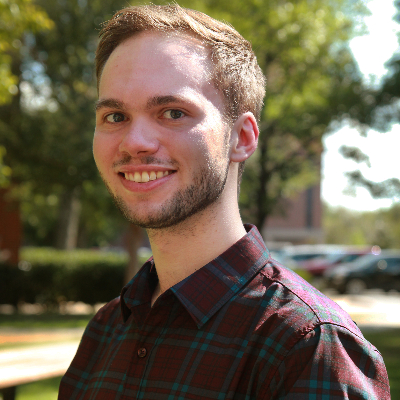
Juan Gómez Bárcena (Santander, 1984), once a student of Literary Theory and Comparative Literature, is a writer who “offers fresh and unexpected perspectives on contemporary literature.” He was awarded the Premio Tormenta al Mejor Autor Revelación for his first book of short stories, Los que duermen (Salto de Página, 2012). He is the author of the novels El cielo de Lima (Salto de Página, 2014; Seix Barral, 2023), Kanada (Sexto Piso, 2017), and Mapa de soledades (Seix Barral, 2024). We spoke with the Cantabrian author about his work and approach to understanding literature following the publication of his latest novel, Abril o nunca (Seix Barral, 2026).
Eduardo Suárez Fernández-Miranda: In 2023, Seix Barral published El cielo de Lima, which was originally released by Salto de Página in 2014. Did you revise the text at all, or was it taken to the printer exactly as it was ten years ago?
Juan Gómez Bárcena: Besides a few minor corrections that readers wouldn’t notice, the text is the same as it was when it was first published ten years ago. At first, I considered the possibility of including some improvements or even rewriting passages that no longer reflect the concerns that interest me today. Fortunately, I quickly understood that interfering with the text would be running the risk of erasing the whole book and rewriting it from scratch—an act that would prove impossible, because I couldn’t write a novel like El cielo de Lima today. That doesn’t mean that I regret having ever published it. But I think books are fixed pictures that represent the different stages of the journey that brings us to being the type of writer we are today: in my opinion, going back would be unnatural, and maybe even parodic, like those pictures that circulate on social media of families that recreate their childhood photos decades later.
E.S.F-M.: El cielo de Lima tells the story of a real literary hoax. In an attempt to secure the books of their idol, Juan Ramón Jiménez, José Gálvez Barrenechea and Carlos Rodríguez Hübner decide to write to him in the guise of a young woman named Georgina Hübner. How did you come to know this story? What led you to write a novel based on these events?
J.G.B.: The first time I heard about Georgina Hübner was in secondary school, when I wrote a paper about Juan Ramón Jiménez for a language arts class. I am positive that the story left a deep mark on me, because I never forgot it. Years later, I decided to write a short account of the story, which, much to my dismay, grew into a three-hundred-page novel. What fascinated me about the story was how it showed that a work of fiction, when it manages to trick the right people, can come to cause undoubtably real consequences. Juan Ramón Jiménez fell in love with a myth named Georgina Hübner, whom he never met, to the point that one could say she became more real to him than many of the flesh-and-blood women he knew during that same period.
E.S.F-M.: In the novel, you include the poem “Carta a Georgina Hübner en el cielo de Lima” (“Elegy for Georgina Hübner”). In its final lines, J.R.J. laments: “And if there is nowhere where our arms might meet / what stupid child, son of hate and pain, / created the world, playing with soap bubbles?” These verses seem prophetic. Do you think Moguer’s famous poet was aware of the trick?
J.G.B.: It seems that, sure enough, Juan Ramón came to know the truth. He said as much with a few words that I find truly beautiful, which largely tie into the idea that the boundaries between reality and illusion are blurrier than they seem: “Whatever the case, I have loved Georgina Hübner. She filled an empty period of my life and existed for me as if she had always actually existed. So, thank you to whomever may have invented her.” But what is most interesting is that he didn’t know the truth until long after he had published the poem. That is, his mention of a stupid child playing with soap bubbles came many years prior to the discovery that a stupid child—two, in fact—had been pulling his leg. I like to think that, through his poetic self, which is far more perceptive than his biographical self, he was in some way aware that something didn’t sit right with the character of Georgina Hübner—that perhaps she was too perfectly constructed to be real.
E.S.F-M.: Lo demás es aire (Seix Barral, 2022) is a sort of time machine. It is set in a small Cantabrian village, Toñanes, whose inhabitants pass through the centuries. What was your intention in writing this novel? Is it trying to pay tribute to the region?
J.G.B.: My intention wasn’t so much to honor a specific region as it was to make the reader aware of the overwhelming weight of history. To this end, I decided to focus on a very specific point in space, the smallest possible, and to propose a reading that isn’t chronological, but rather a simultaneous reading of all its layers of time. For this specific point in space to be the small village of Toñanes is important to me, not necessarily to the readers. I didn’t intend to honor Cantabria, nor much less praise life in the region’s villages, which, depending on the case, can be as negative as it is positive. The idea was for readers, after seeing my love for and interest in Toñanes, to establish their own connections with spaces that are as important to them as Toñanes is to me.
E.S.F-M: I imagine writing this book required some historical research beforehand. What kinds of sources did you draw on?
J.G.B.: The documentation process stretched intermittently over more than twenty years, becoming a sort of pastime or sudoku that I would fill in during my free time. It took a long time for me to realize that all this material would someday turn into the foundations of a novel. I handled a massive number of written sources: wills, lawsuits, maps, land surveys, old account books, newspapers on microfilm. However, the most useful information came from parish records, which can be considered the only truly democratic documents from our past. Because under the Ancien Régime only those who had something to leave to their descendants made wills, and only those with something to gain or lose went to court—almost always men of a certain social rank—but everyone, rich and poor, men and women, the elderly and children, were born and died at some point, and the parish priests strived to bear witness to all their lives equally.
But I did not just consult written sources: my interviews with neighbors in Toñanes were also decisive in learning about our collective memory, and, about how myths, while often less precise than written documents, reveal a kind of truth that written records can never quite capture.
E.S.F-M.: In the novel, we find ourselves simultaneously in different years and different centuries. You seem to use cinematic techniques to achieve this effect. Why did you choose this structure for Lo demás es aire?
J.G.B.: We tend to explain the history of a place or a person linearly or chronologically, but this is just one of the many ways that we can organize time. Sometimes we can understand history better when we play with its chronology, connecting episodes that are far apart chronologically but can be interpreted together. This is what I proposed with Lo demás es aire: that this chronological disorder is far from arbitrary; it could trace a larger argument that allows us to understand the past in alternate ways. To achieve this, I turned to film montage techniques, which helped me string together very different periods and contexts in a fluid and dynamic way.
E.S.F-M.: Los que duermen (Salto de Página, 2012; Sexto Piso, 2019) was your first book of short stories. Do you think it is still more difficult to publish a collection of short stories than a novel?
J.G.B.: I do, or at least that has been my experience with several publishers: short story collections are still harder to sell and especially harder to sell abroad. When I started to publish over a decade ago, I often heard that the short story would end up gaining more traction in the market—its short length and fragmentary character seemed like the perfect genre to accompany us in our ever more fast-paced and frenetic lives. I still sometimes hear similar comments. However, I am inclined to believe the exact opposite: that in a time when we have increasingly less time to read and smaller attention spans, the public demands novels that create a lasting narrative world that we can return to every time we sit down to read.
Of course, this doesn’t mean there aren’t notable exceptions. A good example comes from my own home: my partner, Marta Jiménez Serrano. Last year, she published a short story collection—No todo el mundo—which has achieved a truly extraordinary number of readers.
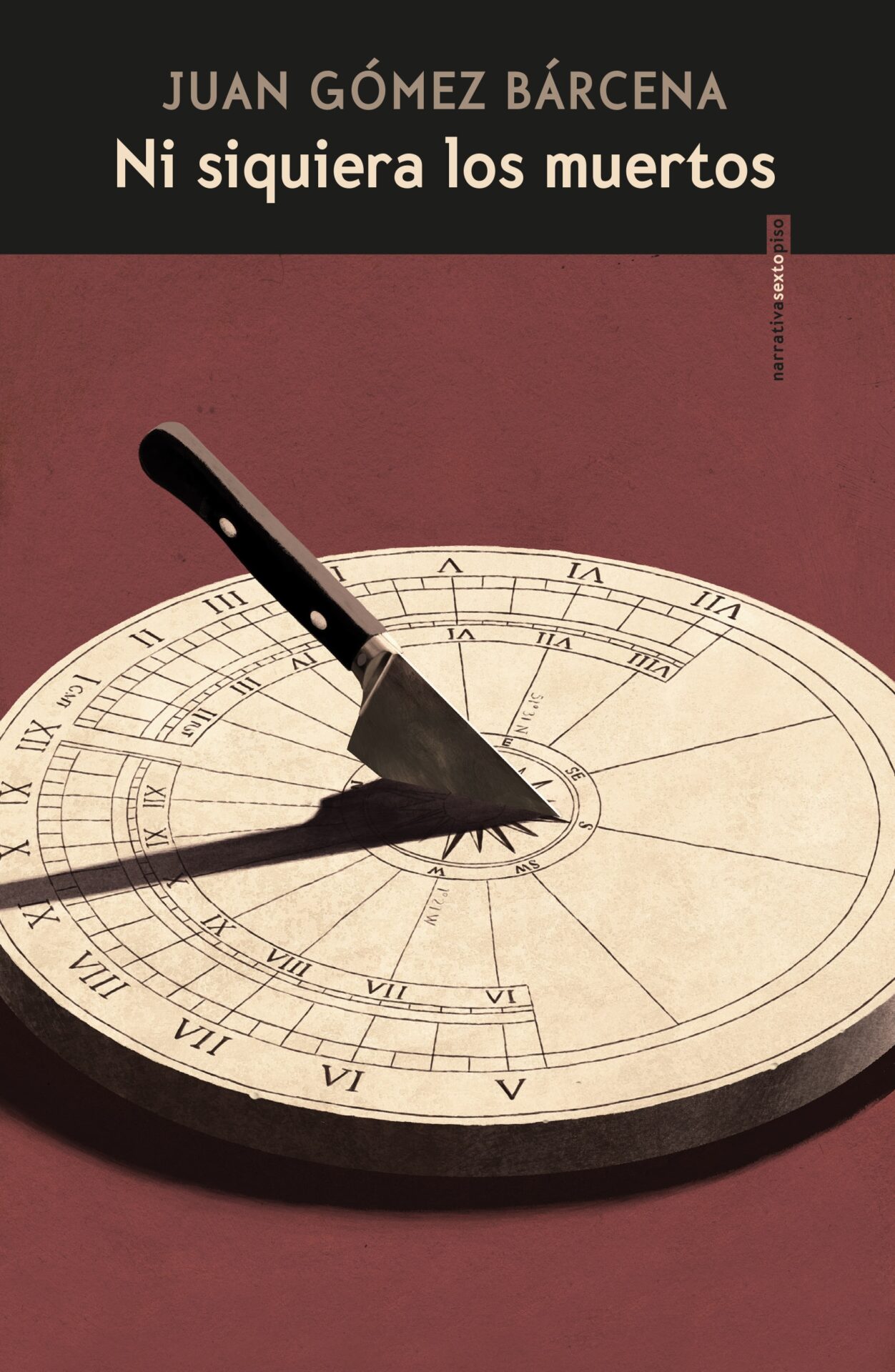
E.S.F-M.: The English translation of Ni siquiera los muertos / Not Even the Dead (Sexto Piso, 2020; Open Letter, 2023) was included on the New York Times Book Review’s list of one hundred best books published in the United States. What does this mention on the list mean to you?
J.G.B.: To start, it was a huge surprise. When Ni siquiera los muertos was published in Spain, it was a very unfortunate release date—it arrived in bookstores in March 2020, just when the pandemic lockdown began. There were few media outlets that chose it as one of the year’s best. The last thing I expected was for a market like the American one—which is far larger and, in general, not very open to literature in translation—to be the one to do it. Also, the joy has been double, as the novel is partially set in the United States. I am happy that some critics and readers found that the book had something interesting to say about their country.
E.S.F-M.: In your novel Kanada (Sexto Piso, 2017), you address World War II from the perspective of those who returned from the conflict: the survivors. What can you tell us about this book?
J.G.B.: In 2010, I received a grant to work at the Spanish Embassy in Budapest. There, I moved into an apartment in the Jewish ghetto, where you could still see bullet marks in the walls. I asked myself, to no avail, which Jewish family had lived in that house: whether its inhabitants had survived the Holocaust, and if so, what kind of life they had when they came home. Out of these questions came Kanada. The novel recounts the experience of an Auschwitz survivor suffering from a severe case of post-traumatic stress disorder, who, upon returning to the city, decides to never leave his house—symbolically recreating the confinement he suffered in the concentration camp.
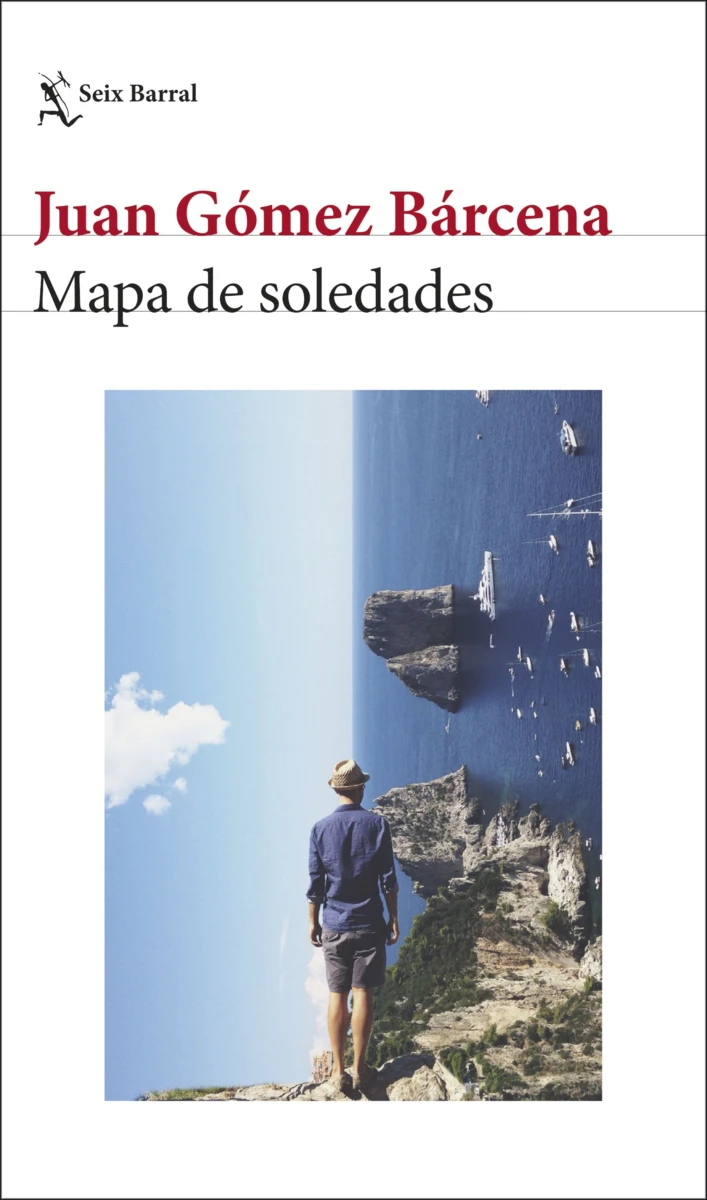
E.S.F-M.: Mapa de soledades (Seix Barral, 2024) is a kind of essay in which you reflect on the experience of loneliness. It is a sort of guide in which several characters appear whose loneliness seems like an inherent part of their lives. How did this book come about?
J.G.B.: Writing Lo demás es aire was very demanding due to the wide historical scope of its plot and the number of topics I felt compelled to put into play. One could say that Mapa de soledades was the product of that exhaustion. I felt that if I were to throw myself into writing another novel, I would rely on similar narrative techniques, and something that defines me is a constant search for new techniques. So writing an essay was my way of distancing myself from familiar territory and forcing myself to explore new narrative paths without the risk of repeating myself or being redundant.
E.S.F-M.: Abril o nunca (Seix Barral, 2026) is a novel in which the protagonist desperately wants to return to an important moment in their life through a “trip through time.” Was it difficult to create a story with an element of the fantastic without abandoning a strong component of plausibility? Are parenthood and family relationships fundamental themes in the novel?
J.G.B.: I think you have touched on the trickiest aspect of the novel, just as I had conceived it: how to make it so that a novel moves within the confines of realism, even flirting with social realism, while venturing into the murky territory of the fantastic. The most complicated part was making it believable for the reader that a completely normal person ends up—thanks to some Internet searches and a traumatic loss—convinced that time travel is possible. As for parent-child relationships, there have in fact been plenty of readers and critics who have called out their prominence in the novel, but I must confess that I never conceived of it as a book about family or parenthood. That choice was driven by another goal: to show how we inhabit not just one time, but many times—that is, that time, beyond its physical magnitude, is an individual experience—and how grief can drive us to feel that our faith in linear time is unraveling.
E.S.F-M.: John1419 is a netizen who follows Daniel in his attempt to “return” to the past. I’m reminded of John Titor—another netizen who travels through time—from Steins;Gate. I’m not sure if you are familiar with this manga or anime, or if it influenced you at all when creating this character.
J.G.B.: I must confess that I’m unfamiliar with the reference, but you have piqued my interest: I need to read it! But it doesn’t surprise me that there are certain connections between the two characters: in science fiction, we often see the role of the initiatory guide, a sort of Virgil or Morpheus from The Matrix, who outlines the rules of the fantastic world we are about to step into.
E.S.F-M.: Bajo treinta (Salto de Página, 2013) is an anthology of short stories in which you present the work of fourteen writers under the age of thirty. What criteria did you follow to make this selection? What use may a book like this and Bogotá39 have for readers and publishing houses?
J.G.B.: My criteria were strictly based on quality, which of course does not suggest that I as an anthologist lack certain biases or blind spots. Over the years, I think the selection has shown more than a few successful predictions. I am happy to have identified authors who have continued writing high-quality, and highly recognized, works, like Cristina Morales, Víctor Balcells, Aixa de la Cruz, and Guillermo Aguirre, to name a few. Of course, the book also lacks some key figures: in my defense, I must say that a few members of this generation who emerged as brilliant writers in the following years hadn’t yet published their first books when the anthology was released.
These lists are useful in that they establish a conversation about today’s literature, all while providing us with a quick way to explore new narrative proposals. For me as a reader, the 2010 Granta anthology was crucial—it was through this book that I was first exposed to some extraordinary writers.
E.S.F-M.: You received a grant from the Fundación Antonio Gala para Jóvenes Creadores. Can you tell us a bit about that experience?
J.G.B.: It was a very important experience in my writing career because I received it at a pivotal time. I had just finished my degree and my parents, understandably, were worried about my job stability, encouraging me to study something else. But I sensed that if I were to set aside my dream of publishing a book for too long, I would never be able to become a professional writer. When I received the grant from the Fundación Antonio Gala, I breathed a sigh of relief, because it gave me the perfect cover: the opportunity to continue writing without guilt, now with the backing of a prestigious institution. I later received several other grants and residencies, but none came at such an opportune moment as that one. Also, at the Fundación Antonio Gala, I met several colleagues and friends who exposed me to other artistic disciplines. It is only thanks to their friendship and influence that I have been able to become the kind of writer and person I am today.
E.S.F-M.: You teach creative writing, an activity to which many writers devote themselves. Could you tell us a little about your workshops?
J.G.B.: My workshops have a maximum of thirteen students, almost always from very diverse backgrounds and interests. They all have only one thing in common: they are committed to writing a long-term project, be it a novel, a book of short stories, or a work of nonfiction. The students are generally of very different ages and levels, and that’s a good thing: the students who are more experienced in writing become a sort of role model for the less experienced ones, while these students provide their counterparts with an extremely valuable reference—an example of how their texts may be interpreted by the average reader. My role is to act as a tutor who guides each student as they plan and develop their projects, and I also teach some theoretical concepts when necessary.
E.S.F-M.: To conclude, we would like to know if you are working on any new literary projects.
J.G.B.: I am working on something a lot more modest than a project. It’s barely more than a glimmer, a happy idea—at least that’s what I hope—that has spent many years running through my head: the dream of writing an encyclopedic novel that gathers the history of value and how it has transformed—communal property, bartering, money, cryptocurrency—over the course of human history.
Translated by Iyan Smith Williams
Buy books by the authors and translators featured in this issue on our Bookshop page!