
The prize jury that awarded the 2025 Premio Iberoamericano de Letras José Donoso to Carmen Ollé highlighted “the artistic, experimental, and political value of her work, marked by bodily and nomadic writing” and recognized her career as essential to Latin American literature. I applaud this recognition, although—it must be said—it should have come much, much sooner. The fact is that Ollé’s body of work, starting in 1981 with the publication of Noches de adrenalina, is one of the most solid, complete, and original of all those that bridge the gap from the twentieth century to the twenty-first.
For different reasons, I return every so often to Noches de adrenalina. Less than a year ago, I did so in order to write a brief introductory text for the back cover and, as always, I was captured once again by astonishment, surprise, amazement, and discomfort. Noches de adrenalina was, and still is, an enlightening book. I wrote: “I do not have the words to express the impact that Noches de adrenalina had on me when it was published in 1981. I had never read poetry that spoke to me like the voice of this woman who moved between Lima and Paris, who made her body speak; this woman who said she was thirty years old and was approaching ‘a heart attack or hysterectomy’; who challenged Descartes, psychoanalysis, and Sartre: ‘Why does psychoanalysis forget the issue of being or not being / fat / little / callow / hairy / see-through / scrawny / haggard…?’” It was a slap in the face, a splash of cold water. A voice that challenged us: Wake up! Look at yourself!
Without a doubt, Noches de adrenalina is an essential book not only within the corpus of poetry written by women, but also within that of Peruvian and Latin American poetry. And today, more than forty years since its publication, it has become both a classic and a cult favorite. Because what is a classic book if not one that stays relevant beyond—way beyond—the time when it was published? And, by “relevant,” I mean that which amazes, moves, teaches, communicates, and enters into dialogue with each new generation of readers.
The currency of Noches de adrenalina is due largely to its language, to the way each of its poems puts forward themes linked to being a woman, to the body. But this is not a poetry of the woman’s body disposed to pleasure—whether to seek \ or give it—as it was understood by the critics who deemed it “erotic” or “prurient,” in line with the new winds of “women’s liberation.” The poems of Noches de adrenalina, as Rossella Di Paolo is right to point out, “not only disrupt the ‘purity’ of literary genres by adopting the tone of the scientific or sociological essay, into which strongly lyrical images are then coiled; they also disrupt conventional values such as saving, cleanliness, courtesy, marriage, and beauty.”
Time has shown us that the transgressions of Noches de adrenalina pulled back, once and for all, a thick veil of modesty, shame, silence, and stereotypes. This is evinced by the fact that, still today, thousands continue to read Carmen Ollé’s book, and words do not suffice to express how much it reveals to us. Her themes, her language, and her perspective are still new because no one else has ever written like her, then or now.
Noches de adrenalina would have been enough to earn Ollé a place in the canon as one of the most significant voices in twentieth-century poetry. And, perhaps, therein lies the power of this essential book, and the reason why her overall body of work is often forgotten, invisibilized, and assigned lesser value, despite the fact that her oeuvre is complex, diverse, daring, always transgressive, and always new. Ollé has shifted from poetry—her least-practiced form, with only the collection Todo orgullo humea la noche (1988), other than Noches de adrenalina—to fiction, autofiction, theatre, essay, and memoir.
Seven years after the publication of Noches de adrenalina came Todo orgullo humea la noche. Critics read the latter poetry collection as a sort of “return to order,” to moderation and restraint. Here, her language recalls Sappho and Catullus: “Stop it, Carmen, going around telling / everyone about your woes”; her references to Dante, Beatrice, and Cavalcanti serve as proof of a turn to the classical. But, while her use of language to discuss themes of the body, love, and desire is more “demure” in this case, and the change in register is evident, it is also true that Ollé carries out a series of transgressive operations, experimenting with a hybrid form in which the borders between verse and prose are blurred, rewriting classical lyrical poetry and the elegant forms of courtly love, and subtly—or not so subtly—subverting them with irony, maintaining her exploration of the subjectivity of the feminine subject. The poem “Recuerda cuerpo,” which “copies” its title from Cavafy, is one example:
Recuerda ahora, vencida por su desdén y su partida,
aquellos momentos en el ridículo motel pintado de
azahares y jazmines.
Cuando, a tu lado, medio calvo, las piernas al desnudo,
como una perezosa de trapo, te amó
tan torpemente (Ollé, 1988).
[Remember now, defeated by his scorn and parting,
those moments at the ridiculous motel with painted
orange blossoms and jazmines.
When, at your side, half bald, legs bare,
like a ragdoll sloth, he loved you
so clumsily.]
This change in register, while maintaining its lyrical nature, would mark Ollé’s poetics inasmuch as—permanently, without changing her subject matter, her perspective, her observational abilities, or her transgressive nature—she would shift between varied genres, always challenging them, revamping them, rewriting them. So, after the poems of Todo orgullo humea la noche, which did not have the same impact as Noches, she published Por qué hacen tanto ruido (1992), a book that is hard to classify, as Reisz points out: “An inner monologue, a rigorous self-analysis, a reflection on poetry as a way of life, a poetic performance constantly interrupted by an implacable critical perspective: this little book is all these things and much more, bravely delving into the abyss of the self.” Is this an autobiography? Fiction? Autofiction? “Neither one nor the other,” Reisz claims. “It is, first and foremost, a fierce inner battle to find one’s own voice contained within an intense confrontation between different languages and visions of the world that echo in the writer’s consciousness” (12). Blanca Varela was quick to praise it: “I am glad to say that this book, in which poetry ‘makes so much noise,’ is the inevitable confession of a most obstinate and legitimate vocation. A lucid and explosive work that we should not stop reading and that shines a revealing light on the Peruvian literature of our time.”
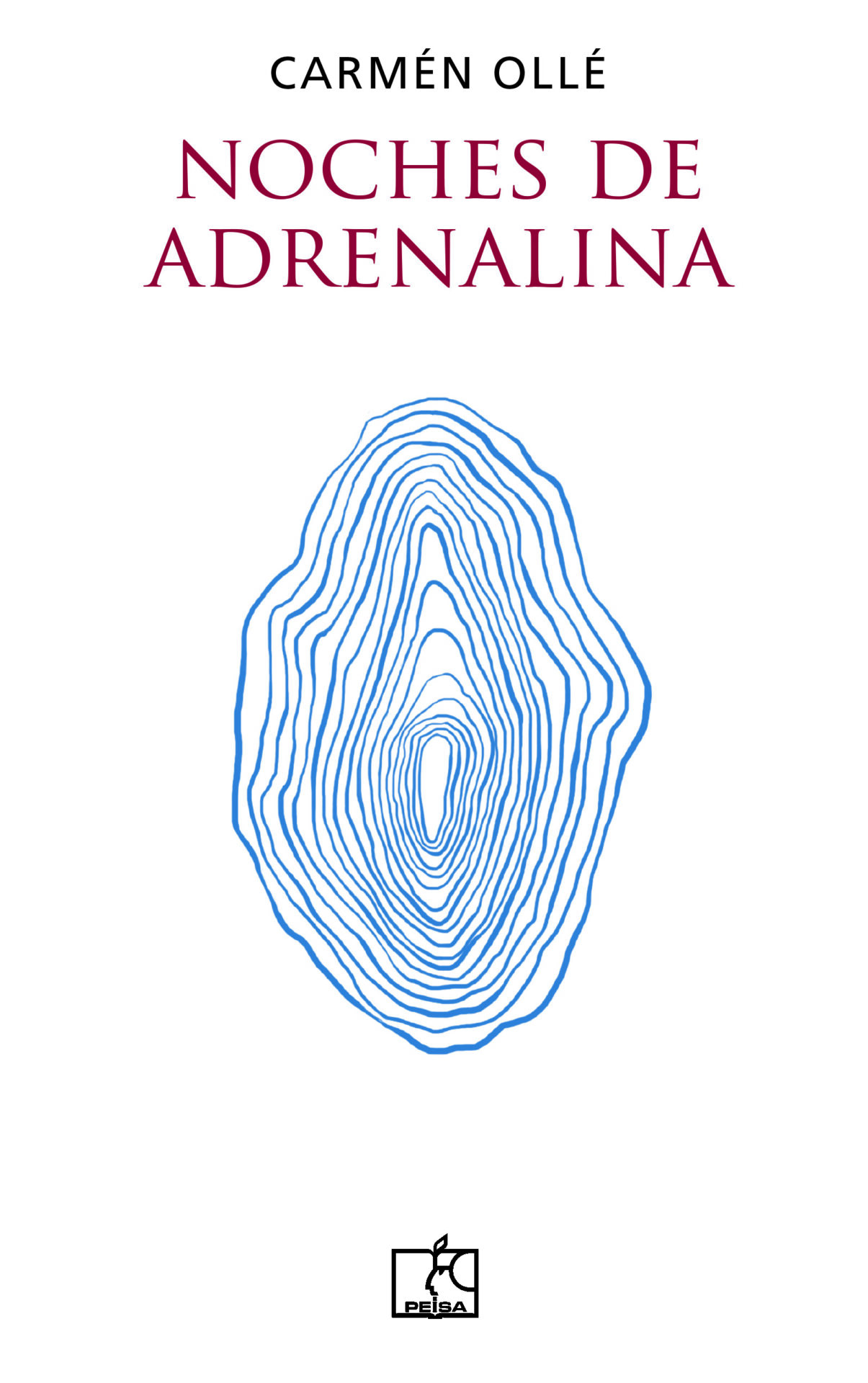 Noches de adrenalina Noches de adrenalina |
 Destino: vagabunda Destino: vagabunda |
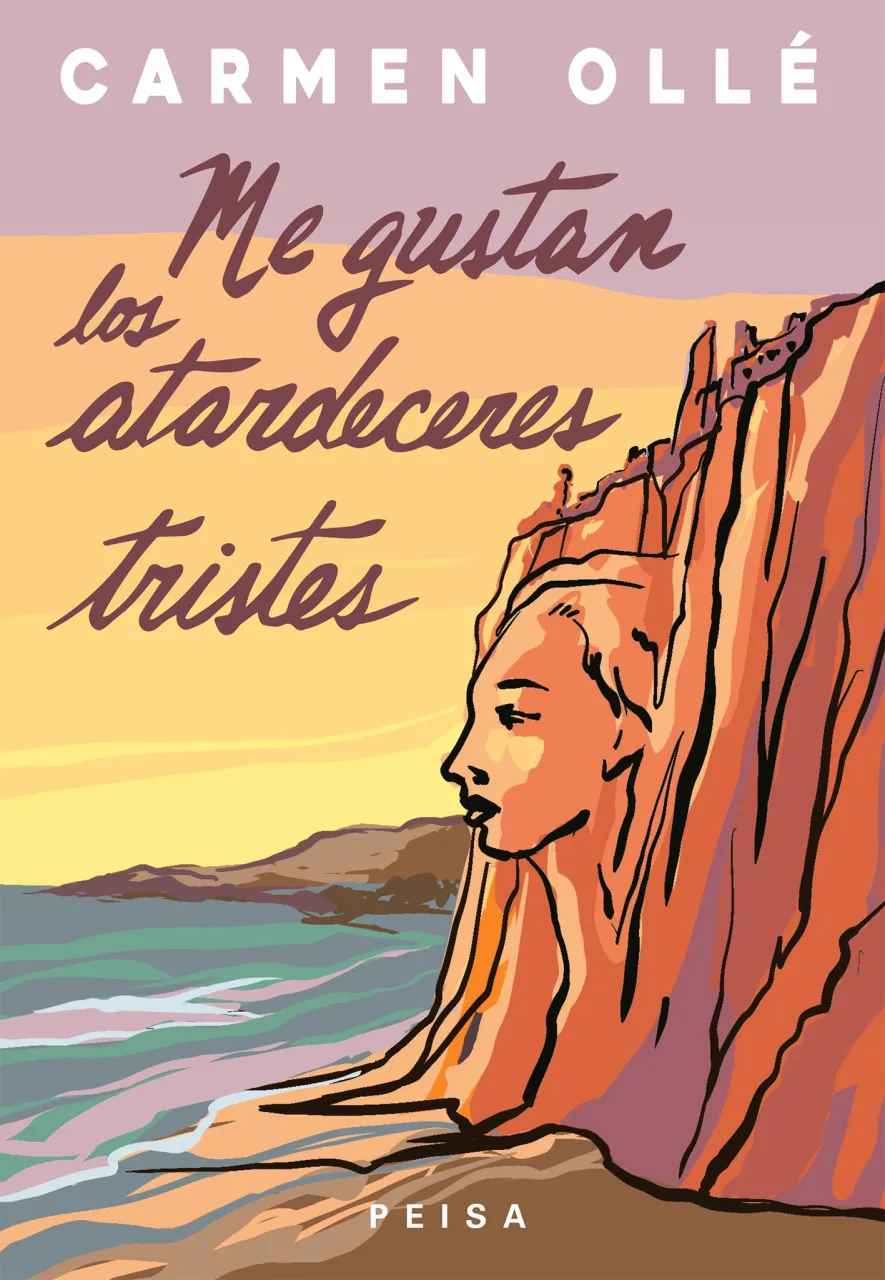 Me gustan los atardeceres tristes Me gustan los atardeceres tristes |
Covers of Noches de adrenalina, Destino: vagabunda, and Me gustan los atardeceres tristes by Carmen Ollé, published by Grupo Editorial Peisa.
Then came the novels Las dos caras del deseo (1994), Pista falsa (1999), and Halcones en el parque (2012), and texts that are hard to sort into genres: Una muchacha bajo su paraguas (2002), Retrato de mujer sin familia ante una copa (2007), Monólogos de Lima (2015), Halo de luna (2017), Me gustan los atardeceres tristes (2025), and her memoirs, Destino vagabunda (2024). Beyond her evident abandonment of poetry, in these works, Ollé explores the crime novel, the essay, theater, biography, autobiography, autofiction, the crónica, and even testimonio; but she does it all “her way,” still marked, beyond all differences, by her persistent transgression, and not only in terms of genre.
Indeed, from Noches de adrenalina to Me gustan los atardeceres tristes, each of Ollé’s publications has challenged readers’ expectations. As in the case of Todo orgullo humea la noche after Noches de adrenalina, each of Ollé’s new works not only challenges its precursor but also subverts the genre in which the writer situates it. One need only think of Pista falsa as an example. Published immediately after Las dos caras del deseo, it is a detective story that transgresses the norms not only of the classic crime and noir novel, but also of the most transgressive neo-crime fiction, like that of Mario Levrero. And it is placed in a register very different from that of Las dos caras del deseo, a novel that tells of the day-to-day life of a middle-aged woman in a violent, decaying Lima.
This ceaseless challenge to her own work and that of her predecessors could be explained through the “anxiety of influence,” a notion coined by Harold Bloom, which refers to the sensation of anxiety that poets feel in the face of their forebears’ work. Ollé belongs to the small minority of strong poets—those able to create, in Bloom’s terms, an original oeuvre, radically new, that will later be imitated by countless epigones: in other words, she is a forebear herself.
But this is true only insofar as it alludes to the brand of originality that permeates all of Ollé’s work. It is false when it comes to “anxiety,” that sort of desperation that consumes, as Bloom suggests, those strong poets whose resistance to the influence of the greats that came before them leads them to radical ruptures. Ollé does not anxiously pursue originality because she refuses to be the epigone of any precursor; in her case, her way of being in the world, of processing what she observes, what she lives, what she endures, her way of reading other writers and processing their work always escapes clichés, norms, generalization, repetition. If there is any anxiety to speak of, Ollé’s would be the anxiety “of repetition,” expressed in her persistent need to explore new forms, new types of language, and new genres.
Referring to the impact of Noches de adrenalina, Modesta Suárez pointed out that this book, provocative as it was in 1981, would nonetheless not become a “model” for other women writers. “It stands as a climax, despite being the first book by Carmen Ollé. The author does not recall or resume this book in her subsequent works. A figurehead of a book, it became, nonetheless, a source of security for others. In its original verses, full of energy and injected with adrenaline, space and song were opened, finally and definitively, to the women poets to come.” I think this claim can be extended to all of Ollé’s work: she has opened, and will continue to open, new paths, but she has not established models to be imitated.
In short, Ollé has tirelessly traversed different genres, formats, and languages, never repeating herself, as if she were running away from her own production; and, nonetheless, her work is marked by unity. By this I mean we can identify “Ollé’s poetics” in each and every one of her publications. This unity in diversity is the characteristic trait of her unique, unmistakable, and highly personal body of work.
Translated by Arthur Malcolm Dixon
Buy books by the authors and translators featured in this issue on our Bookshop page!