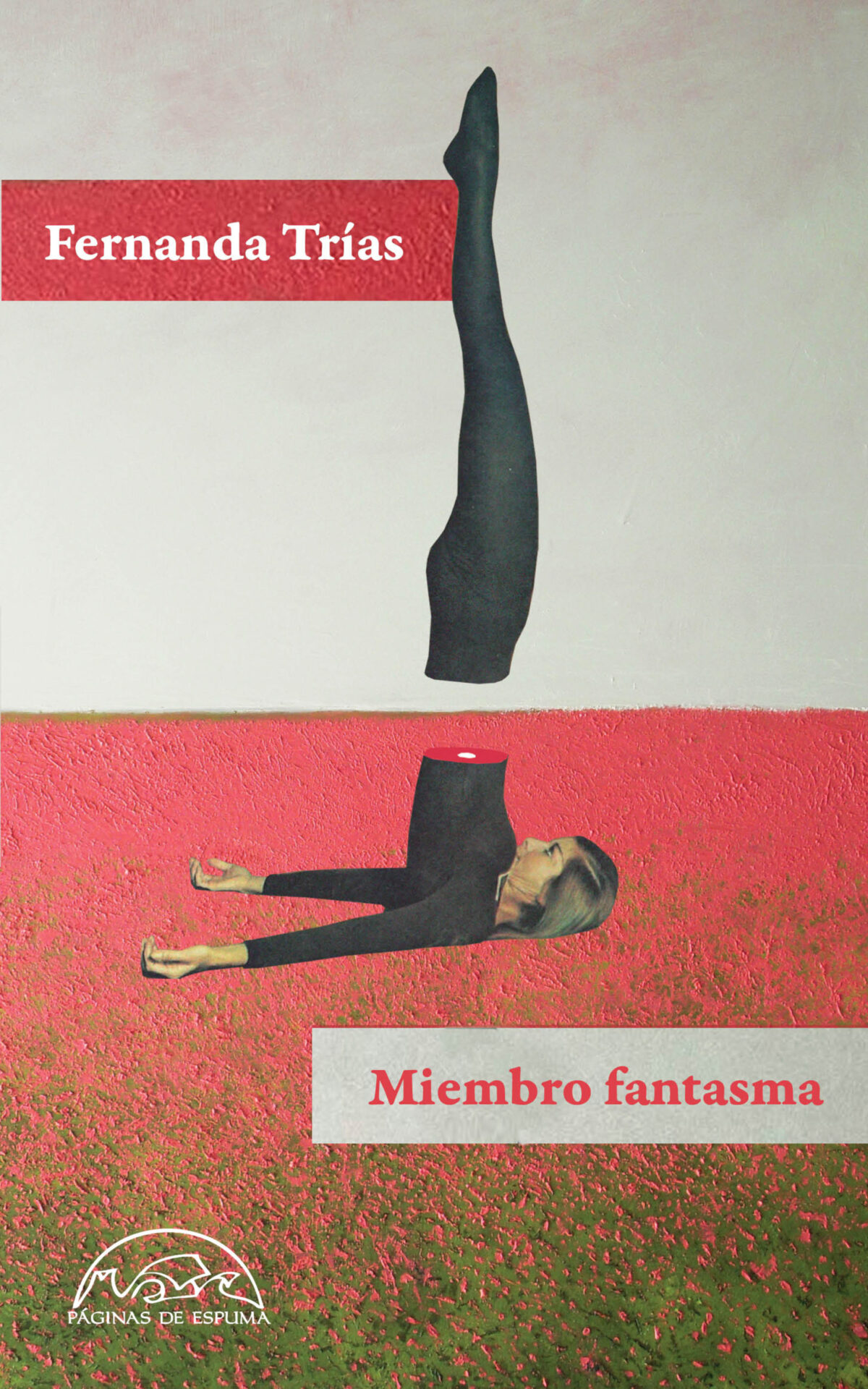
Exploring beneath the surface, venturing beyond what we can see, grasping at what escapes us—we attempt all of these, almost unavoidably, with each short story in Miembro fantasma (Páginas de Espuma, 2026), the most recent book by Uruguayan novelist, short story writer, and translator Fernanda Trías.
A writer whose greatest worry is creating a work of literary value; a mother who forgets her own needs to ensure the best for her children; alcohol as the best psychologist; mountains that want to become clouds; memory as a skittish animal. With all these scenarios, the two-time winner of the Feria Internacional del Libro de Guadalajara’s Premio Sor Juana Inés de la Cruz, among other prizes, invites us to peek into these everyday realities through a lens of estrangement—one with which we recognize “the mystery of the other, which is always changing.”
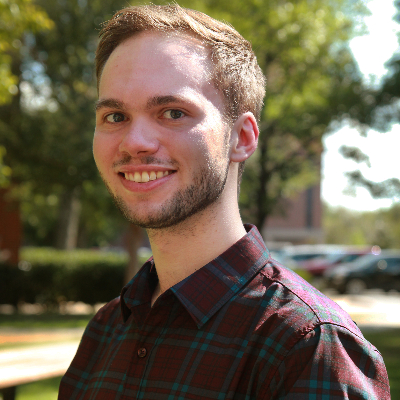
Juan Camilo Rincón: How did you go about building the book’s architecture? What was it like to return to short stories after El monte de las furias (forthcoming next year in Heather Cleary’s English translation as The Mountain Woman from Scribner)?
Fernanda Trías: I don’t necessarily feel like I have returned to short stories, in the sense that I was still writing them while working on my novels Mugre rosa (translated as Pink Slime by Heather Cleary) and El monte de las furias. I wrote both one after another, almost without stopping, though there was a brief break in between them when I was firming up the stories I had started to outline while working on Mugre rosa.
I hadn’t really sat down to tackle them just yet, but I had outlined them, taken notes, written down ideas as they came to me, and kept them in a folder. During that middle period between novels, I was so tired that I couldn’t find the energy to step right into building another novel. So, I decided that as a way to rest, I would take all those stories that had stayed as drafts and go one by one, systematically reworking and editing them.
It felt like a break not because they are easier to write, but because they took me out of the mindset of writing a novel and brought me to another genre—to another way of thinking—to look for other things.
J.C.R.: On precisely that point: the collection includes a particularly intense look at the writing profession—the demands authors place on themselves to accommodate market demands, machismo in the literary field, the aspiration to become a writer. How has your own reflection on the craft of writing provided material for these stories?
F.T.: I think it has to do with the fact that I am currently in a phase where I am reflecting on these things. I have reflected on this for years, and I think that time, experience, and the ability to say: “It’s been almost twenty-five years since my first book, La azotea (translated as The Rooftop by Annie McDermott), was published for the first time in 2001,” have helped me look back and think about many things.
Some have been positive, like how the world has changed and how my books and the books of my fellow women writers are received. But there are also some things that stay the same: prejudices that continue, inherited ideas that remain deeply embedded.
As I reflected on all of this, I felt that the short story would be a good place to bring out everything I had not been able to develop very thoroughly in my novels that could find its place in the short story, in a different way.
This book was, for me, a laboratory to explore forms and themes, and one of the things I wanted to experiment with the most was irony: talking about all these thorny issues, but with a certain humor, while at the same time not taking away from their severity.
J.C.R.: Tell us about the hidden as a driving force for these stories—how the story suggests but doesn’t reveal everything, always bringing the reader to questions rather than answers or a sense of certainty.
F.T.: I thoroughly enjoy reading those great masters of the short story that cleverly work with that hidden story, or as Piglia would put it, Story Two. Or Hemingway and his iceberg theory: everything that lies below the surface, that line that separates the visible and the invisible. Story One is the story itself, but I have always been far more interested in what lies beneath, which is what really gives the story its weight and lets you reread without growing tired of it—what lets you reread a story and enjoy it all over again, as there is always something that ultimately escapes you. There is a bit of a very interesting technical challenge in stringing together this Story Two in the in-betweens, the silences, in everything that Story One does not say, and in how everything comes together in the end. When you reach the end, something clicks, bringing Story One and Story Two together to the surface.
J.C.R.: Another common thread of these stories is a feeling of strangeness or estrangement towards oneself and others. I get the sense that you redirect the reader’s gaze elsewhere.
F.T.: I think that has a lot to do with that way of looking. I have spent a lot of time on this path trying to refine it. That is my life’s work: fine-tuning that way of looking by working on the precision of my words, my phrases. The question is: how do I see reality? I see it almost certainly through a strange lens, because I see the oddity in everything. I can see the strangeness in being oneself and not somebody else, for example, and how that somebody else is an unsolvable mystery. I would even go so far as to tell you that the strangest thing to me is how even the closest “other” in our lives is an unsolvable mystery. For this reason, in my opinion, human relationships as a literary theme can never be overdone. They will never grow old because there is something about them that is almost impossible for us to grasp—something having to do with the fact that the mystery of the other, the mystery of personality, is always changing. In this way it is an inexhaustible theme because, even when you think you understand it, it changes. It’s not that you don’t know it; it’s that it changes into something else. And that is not to mention all the many other things I find stranger each day, like how the world works, what lies beyond, everything we don’t know: all of those mysteries that range from insects to the universe.
J.C.R.: Speaking of insects, you made me think about the presence of animals in many of these stories—a sparrow, dogs, cats—and in one of them, you even ask: “What is more human than a pet?” What about animals allows you to address questions about what it means to be human?
F.T.: It’s precisely what you were just saying: because they allow us to ask questions about humanity, but also because they are part of an otherness that fascinates and intrigues me. I would do anything to one day understand the languages of dogs, cats, and birds; to understand what they might be saying. On the other hand, I would say that it now seems impossible for me to write without taking into account those other living things, these more-than-human beings. I think it is essential to include them in our world. In the story about the pigeon, for example, it became, for the protagonist, a being loaded with mystery, which she gradually sees with a certain promise, as something overflowing with symbols. I also thought about this: how there is so much to learn from these more-than-human beings, like how they manage solitude, how they occupy public spaces, and how they interact with other species. These ideas fascinate me more and more each day.
J.C.R.: Something I thought was particularly lovely about this book, and I feel like this is very characteristic of your work, is the changes in forms of language. For example, popular slang versus literary language, or localized dialects versus neutral language.
F.T.: I have been reflecting for a long time on how to integrate these two forms of Spanish into my work, both of which I consider my own. I think I am the product of that hybridity; I would even say that I have even more combinations of Spanish in my life because I have lived in many different places, and there are words from each that I have never left behind. I have been living in Colombia for over eleven years, so it is the closest thing I have to a second homeland. But, for example, in No soñarás flores, there are stories that take place in Buenos Aires, so its dialect was more involved, including specific porteño slang, but over time I began to lose those expressions. I have started to experiment with how I can put this mixture within me to work in a way that still feels like my own.
J.C.R.: That experimentation is quite evident in El monte de las furias.
F.T.: And in some of the stories from Miembro fantasma, you can see the parallels; there you can notice that they were written around the same time because there are connections—points of contact. In any case, I am always trying to make sure that any intrusions of Colombian language in my Rioplatense dialect—and, more specifically, my Uruguayan one—make sense; that they emerge organically through characters who, like me, are shaped by the experience of foreignness. One of the stories deals with how one immigrant suffers a specific type of violence she had never experienced up until that moment. It is a deeper reflection that goes beyond language, while also residing within it and the idea that there exist certain words that feel more adequate to name certain realities, because they are words from those places. “Última carta a Claudia” also follows an immigrant, whom we assume to be Uruguayan, who writes the story—a woman from Montevideo who travels to Lima but lives in Bogotá. This part isn’t addressed in the story but, again, she is a woman who has been in these different places. That is something I have always felt: as a writer, what I write exists between these places, and this in-betweenness proves valuable.
J.C.R.: This talk of places has made me think about, for example, the rehabilitation center or the basement that houses a sort of self-help cult, each space not too close to our general daily experience. How do you work with those kinds of spaces in your narrative?
F.T.: There is always a tension between inside and outside, something that has recurred in my books, though unconsciously; I have just noticed it recently. There are those spaces and places that are like rooms, but there is always an inside that looks outward, or an outside where, in some way, you feel you can’t quite reach the inside, like those feet you see passing by the window, for example. There are often windows, and this is something others have helped me see—I hadn’t noticed before. People ask me: “Why are there so many windows in your stories and so many people looking through windows?” In “Una mujer de su época,” there is the woman who watches a stray dog through her window; the woman who watches the pigeon through her window; the woman in “Última carta a Claudia” who sees the mountains of Bogotá through her window; the children at the rehabilitation center who sneak out through the window to break into a house; etc. That question has helped me realize the importance of the window as a border between outside and inside—a penetrable one that allows this exchange, be it glances through a glass pane or a hole you can pass through. I find the concept of the window as a limit between places very interesting.
J.C.R.: These stories also feature some historical events: the dictatorship in Uruguay, the 1982 World Cup, the attack on the Twin Towers…
F.T.: I believe all these historical events have left a mark on us—or at least on my generation. There is the dictatorship in Uruguay, which needs little more explanation; the fall of the Twin Towers, which transformed the entire world; COVID, which also transformed the world. There are certain moments that give you that sense that there was a “before” and now there is an “after.” The issue of COVID, for example, allowed me to think about several things that have to do with unresolved grief—those pains that remain unchecked. The dictatorship in Uruguay is one of these pending issues: think of all of those who disappeared and how, to this day, we still don’t know where they are, we are still searching for them. All of these issues are pending; they have not been resolved. On the other hand, there is the fall of the Twin Towers, an event which, beyond having transformed the world, marked, according to some, the true beginning of the twenty-first century: September 11, 2001, not January 1, 2000. I became interested in the horribly brutal trauma that came with the attack: it was destruction that happened inside the heart of an empire, and at the same time, there is a boy who struggles with his own fall, while obsessed with the image of collapse on loop on the TV—those images that remained so fixed in our collective unconscious, just like the Twin Towers. In my stories, there are many characters that come to grips with falls. Those are also threads of meaning that I go weaving between one story and another to give them the cohesion and semantic density that I wanted to give the book as a whole.
Translated by Iyan Smith Williams
Buy books by the authors and translators featured in this issue on our Bookshop page!