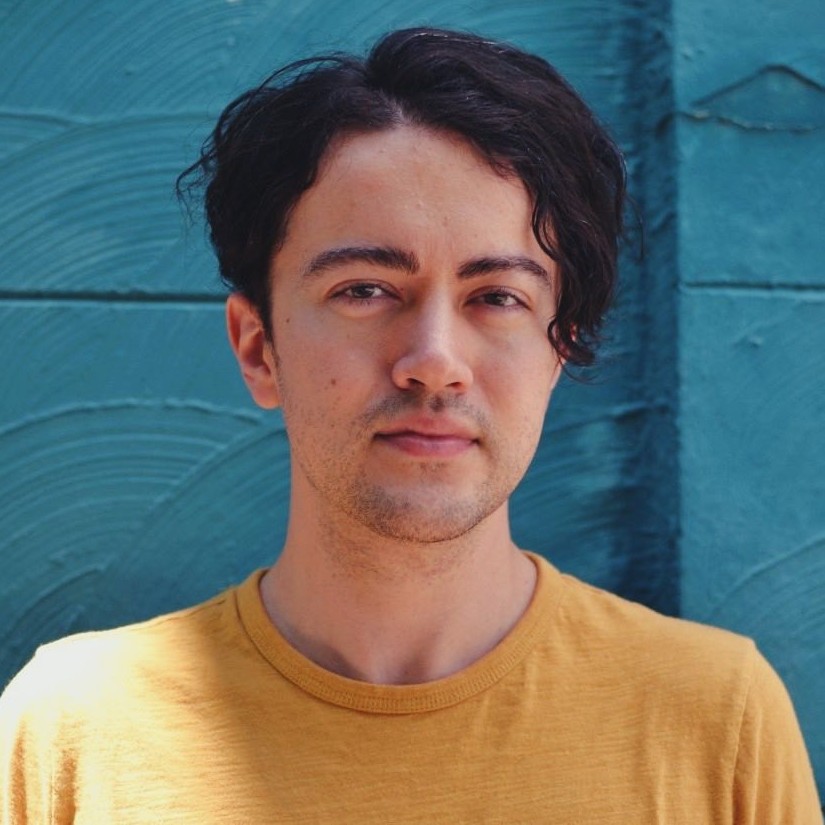
Editor’s Note: Luis Mateo Díez gave this interview a few days before he received the Miguel de Cervantes Prize. We present it here as a heartfelt homage to him.
Luis Mateo Díez (Villablino, 1942) is one of the world’s most important writers of contemporary fiction. The body of work of this prolific Leonese author stands out for its “extraordinarily rich technique and poetic language and a constant concern for the moral dimension of the human being.” Novels like La fuente de la edad (1986), El expediente del náufrago (1992), La mirada del alma (1997), and El reino de Celama (2015)—a trilogy consisting of El espíritu del páramo, La ruina del cielo, and El oscurecer—serve as proof of his narrative talent. He has received major awards for his work, including Spain’s Premio Nacional de Narrativa, the Premio Miguel Delibes, and the Premio Café Gijón. In the year 2000, he was elected to the Royal Spanish Academy, where he holds seat “I”; his acceptance speech, titled “La mano del sueño (algunas consideraciones sobre el arte narrativo, la imaginación y la memoria),” is an excellent display of his literary thought. Luis Mateo Díez’s work has been widely translated, and some of his stories have been adapted to the stage and screen. We were glad to have the opportunity to speak with the Leonese author about his work and the now-mythical place he created: Celama.
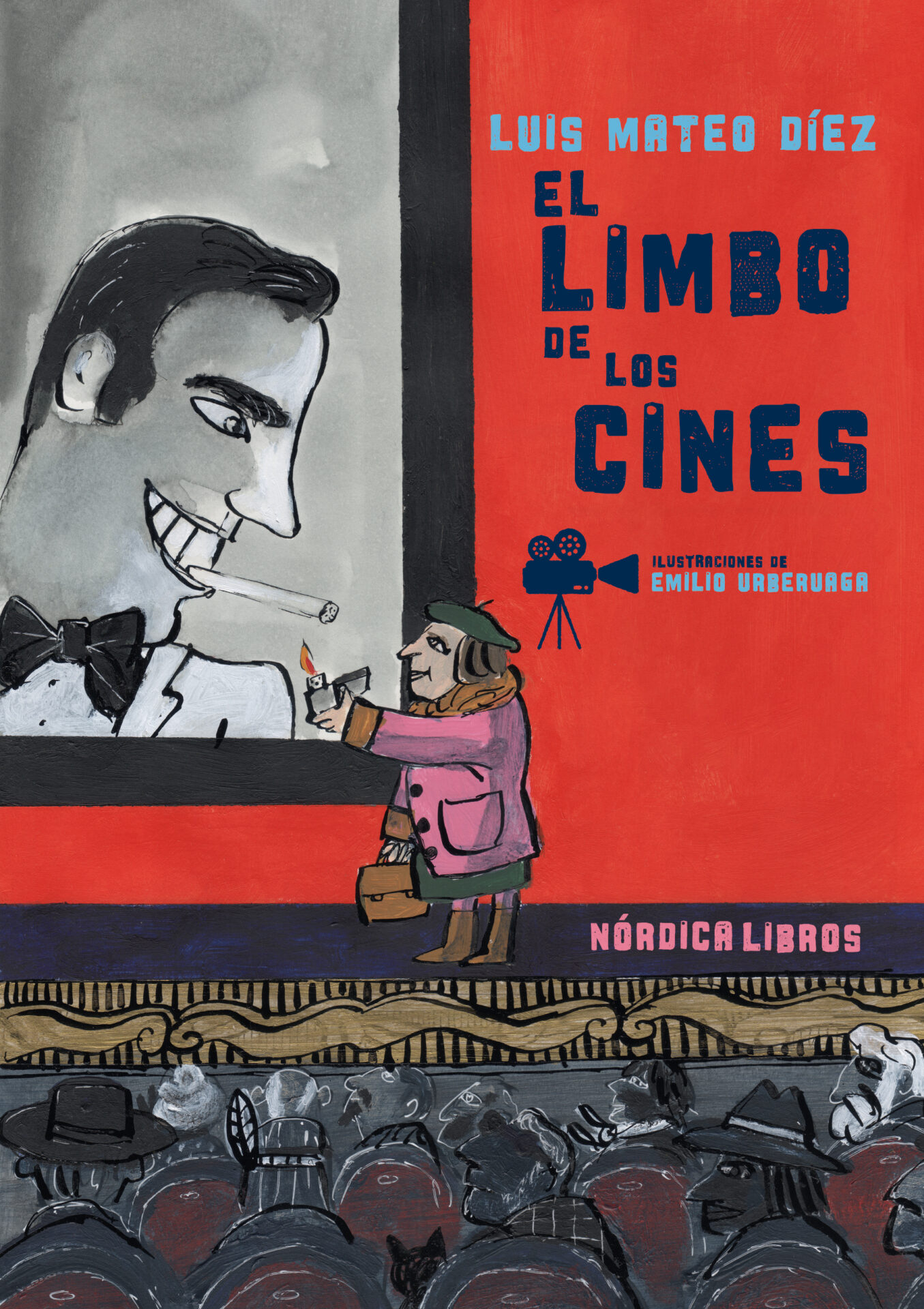
Eduardo Suárez Fernández-Miranda: El limbo de los cines is a book of short stories that seeks to pay homage to “those palaces of dreams that mean so much in viewers’ lives.” The experience of cinema also left its mark on the work of some other writers of your generation, such as Manuel Puig and Guillermo Cabrera Infante. What has cinema meant to you and your own literary work?
Luis Mateo Díez: The seventh art entails a popular encounter, on a massive scale, with the imaginary, through an invention as extraordinary as the moving image. This experience marked me from an early age. The stories told by images at my town’s cinema, the stories told aloud, reading. They were interconnected spheres of imagination and fictive creation, each attendant to the other, that expanded in unison. Cinema also enters into literature, and I believe it was an enriching influence on me as a literary storyteller.
E.S.F-M.: The book is illustrated by Emilio Urberuaga. You previously published Gente que conocí en los sueños with drawings by MO Gutiérrez Serna. How did these collaborations come about? What do you think illustrations contribute to your narrative works?
L.M.D.: They are both illustrators I admire a great deal. They contribute their own worlds and their perspectives, and they make the book more appealing. I have always had close relationships with visual artists.
E.S.F-M.: You created the imaginary land called Celama: a literary space that is a “sum of passionate, melancholic, exuberant, and secret lives.” William Faulkner, Gabriel García Márquez, Juan Rulfo, and Juan Benet did the same thing. How did Celama come about? Where did it come from?
L.M.D.: It came from the experience of living for many summers on the barren plains, a wasteland, where there were many remains of the peasant past, and the need to have a territory, an imaginary space for my stories, which always take place in Celama and its neighboring lands: a sort of human province for my Ciudades de Sombra.
E.S.F-M.: Celama is imaginary, but at the same time, it is perfectly demarcated: “A land located in the middle of the southern half of the Province, a strip perfectly delimited from the rest of the Tableland by the Valleys of the Rivers Urgo and Sela.” Why did you choose this specific space, a copy of the Páramo Leonés (or “Leonese Plain”), to develop El espíritu del páramo, La ruina del cielo, and El oscurecer, among other works?
L.M.D.: Due to that experience I mentioned, that illumination of the unreal disrupting the real, the consistency of symbols and metaphors that intertwined and emerged as I came up with stories. My tales of Celama have a lot to do with the disappearance of peasant cultures.
E.S.F-M.: Some stories from the novels that form the trilogy El reino de Celama were published under the title Celama (un recuento). What criteria did you follow when selecting the stories that would make up this book? Did you rewrite any of the texts?
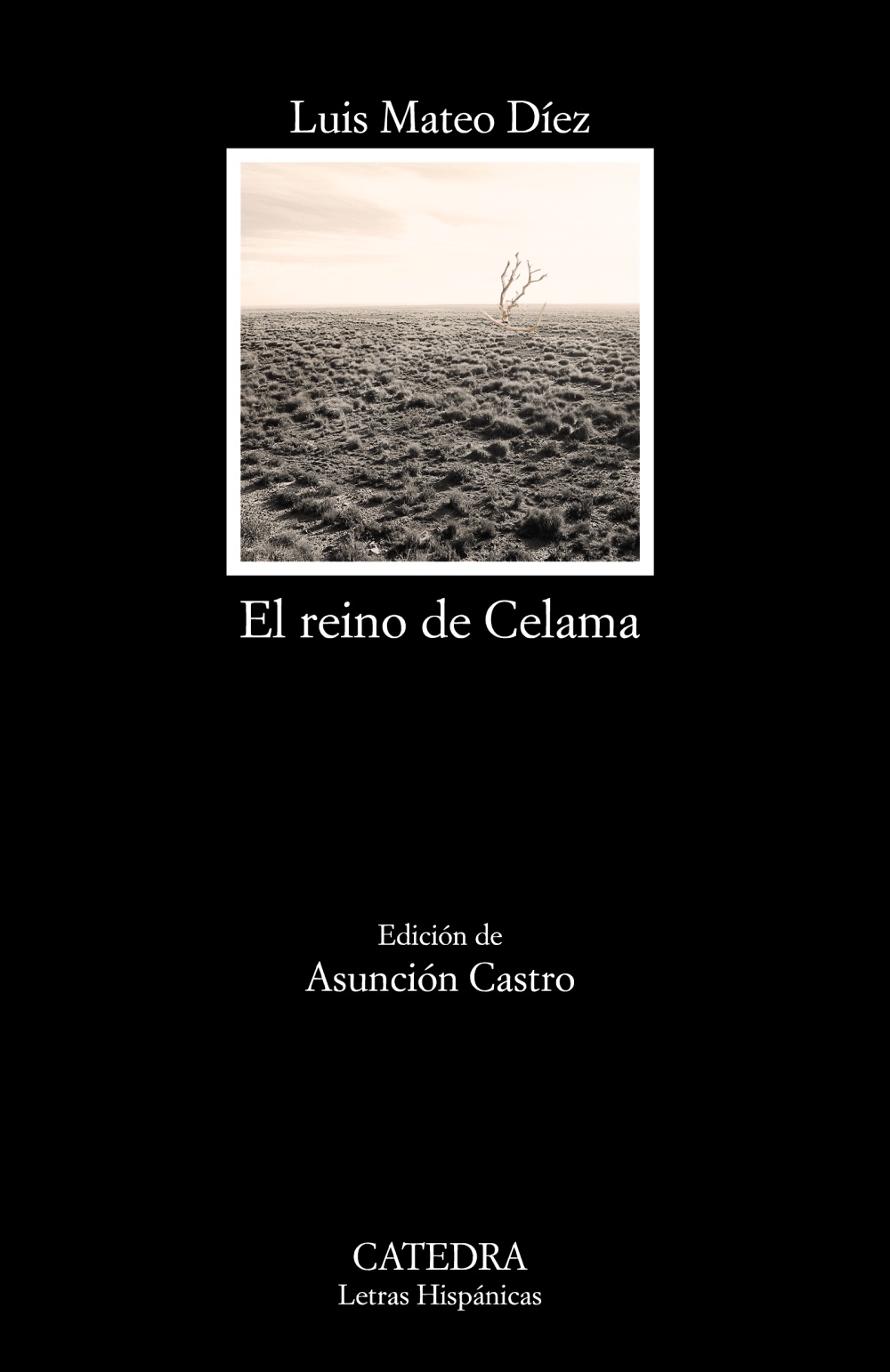
L.M.D.: That was an idea and suggestion from Professor Ángeles Encinar, who is one of the most prominent specialists on my work. She detected the presence of short stories in the trilogy, what would be called a “compound novel” in many contemporary literary studies. I revised the stories to give them greater individuality; I put them in a thematic order, I revived previously unpublished texts. In Ángeles Encinar’s hands, all of this took on the dimension of a journey to Celama, a portico through which to get there.
E.S.F-M.: Mis delitos como animal de compañía is perhaps your most humorous book, with elements of the picaresque novel. What can you tell us about this work?
L.M.D.: It is a mental journey, the story of someone who accepts his disorder as a space of unhinged lucidity and, from this perspective—which is humorous at times, and dramatic or pathetic at others—creates a personal X-ray of the disordered world in which we live, or in which he believes we live.
E.S.F-M.: Vicisitudes includes eighty-five stories that combine to form a novel. What shared elements did you find between them to make up this whole? Might we call it another compound novel, in the style of Winesburg, Ohio?
L.M.D.: They might form a novel, or eighty-five possible novels, some of which were written later. The idea of a compound novel seems accurate and very interesting to me. There is a world, one derived from my Ciudades de Sombra, my imaginary universe, and a sort of human comedy, a lattice of vicissitudes that delve into the most meaningful parts of many characters’ lives.
E.S.F-M.: You have recognized that, as a writer, you see yourself as an heir to others: “I take up the inheritance of all the great writers who have come before me and whom I have read.” Could you tell us more about the writers who have influenced your work?
L.M.D.: I call myself an heir as a way to recognize my many debts, as I consider myself a porous and grateful reader. There is a long-running line of learning and admiration, from the Greek and Latin classics, from the Spanish Golden Age, from Cervantes, from the picaresque. It all has its relevance, nothing is alien to me. My influences are more nebulous, more engaged. There was a time when I read Valle-Inclán, Galdós, and Clarín with great attention and devotion. Pavese and Bassani inspired me, as did many others. Closer at hand was the ever-friendly influence of Juan Eduardo Zúñiga, Manuel Longares, and José María Merino.
E.S.F-M.: The rural world is very present in your work. The culture and wisdom of small towns and villages are lost as their inhabitants disappear. Are your novels an effort to reclaim a way of life that seems to have come to an end?
L.M.D.: I have no great interest in sociology, and in my work, the rural world has a legendary dimension, in accordance with my lived experience, although in Celama there are indeed many metaphors on the twilight of peasant cultures. In my childhood, I inherited oral traditions, the heritage of a popular literature that had a great deal of strength and presence in the land where I grew up, always a thousand light years away from costumbrist models.
E.S.F-M.: Celama has made its way from books to the stage. How do you feel as an author when you see your work reinterpreted for the theatre?
L.M.D.: It is a very significant experience, and one that has been refreshed, since there is now a new staging of Celama that recalls and stylizes its predecessor. I have witnessed firsthand the efficacy of the word on the stage, the scale of what is heard and performed, when I simply told the stories themselves. It has been a very enriching experience, since the Teatro Corsario understood Celema in its most expressionistic sense.
E.S.F-M.: Your story “Los grajos del sochantre” and your novel La fuente de la edad have been adapted into films. Were you pleased with the results of these adaptations? Do you normally take part in these projects yourself?
L.M.D.: I am not particularly interested in taking part in such projects, but there were helping hands in each of them. Chema Sarmiento made a very expressive adaptation of “Los grajos,” in keeping with the story, and Julio Valdés made of the source material the best film he could, or the best he was allowed to make.
E.S.F-M.: “I have always thought the storyteller’s memory is the best container for the literary elements of his experience, that soil that saves from oblivion what deserves to survive in writing as it is watered, that recovers the most meaningful parts of our lives and memories in order to nourish the imagination.” These words come from your acceptance speech as you joined the Spanish Royal Academy in 2001. In hindsight, do you believe you have achieved, with such a broad body of work, the goal of “recovering the most meaningful parts of our lives”?
L.M.D.: It would be arrogant of me to say I had done so, but I would not resign myself to saying I do not try, since it is an ambitious challenge; I do not write to please others or myself, but rather to delve into the experience of the imaginary that offers an illuminating contrast to life itself, to our condition, to our contradictions and differences.
E.S.F-M.: You have spent more than twenty years in the Spanish Royal Academy, where you hold seat “I.” What can you tell us about your experience in this institution? What would you say have been your greatest contributions as a member of the academy?
L.M.D.: My contributions, without a doubt, have been my work on the commissions that tend to and revise the Dictionary—a highly discriminating and cautious task that the academy’s members and workers take on with a great deal of commitment. Noting down and revising words, studying those that are newly arriving, and making such decisions, as I see it, is a test of one’s verbal experience; and we should not forget that we writers are like marksmen in this sense, we come very close to the creative meaning of language. What’s more, the Academy and its sister academies in the Americas have effectively contributed to our common consciousness of the Spanish language.
E.S.F-M.: You have received prestigious awards for your work, and you are seen as a likely candidate to receive the Miguel de Cervantes Prize. What does this recognition mean for a Spanish-language writer?
L.M.D.: They are rewards worthy of gratefulness, generous encouragements to keep writing.
E.S.F-M.: You once said, “Writing has been my refuge for a long time, a personal territory deeply tied to my life.” Do you have any new projects in mind?
L.M.D.: I am a prolific writer. I can say that, at my age, I now live only to write, as writing is my way of life, along with the experience of the imaginary that I so often repeat by reading or watching films, as I am a cinephile as well. I have countless stories in mind, novels I will never manage to finish, and, as an irremediable consequence, too many will be left behind when my time is done. There is no affirmation in being prolific, but I can attest it is a pleasure to be this way. What more can I say?
Translated by Arthur Malcolm Dixon
Buy books by the authors and translators featured in this issue on our Bookshop page!