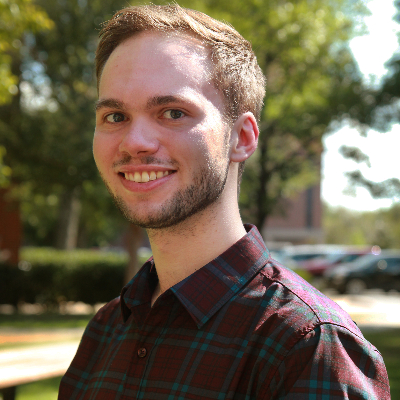
Jordi Fibla Feito (Barcelona, 1946) is one of Spain’s most prestigious translators. After studying Philosophy and Letters, he entered the editing world as a proofreader and editor for the publishing houses Noguer and Plaza y Janés. In 2015, he was awarded the Premio Nacional a la Obra de un Traductor for his “long career as a professional translator, versatility, and the quality of his work.” Among the authors he has translated are Philip Roth, Saul Bellow, Lawrence Durrell, and Henry James, though he is also known for his translations from Japanese, which are collaborative works with Keiko Takahashi. In the 1980s, he served as a translator for the magazine Quimera.
Eduardo Suárez Fernández-Miranda: On the work of a translator, Don Quixote commented: “A man could occupy himself with worse things, and things that would bring him less profit.” What drove you to this profession?
Jordi Fibla: It was a vocation that lay dormant until I discovered it in my youth. Since I was very young, I loved reading, and I often wondered what it would be like to read those translated works in their original language. At eighteen, when I began working at a publishing house, I dreamed of becoming a writer, but I struggled with a severely limited creative potential. There I met Andrés Bosch, a novelist who also translated—or rather, a translator who also wrote novels. That way of life seemed ideal: you write a book and then dedicate your time to translating while you wait on the idea for your next one. Bosch never gave me any advice about writing, but he certainly taught me about translating. A decade went by, during which I juggled work and study, before I finally tried to put that ideal into practice, though it has only been partially realized. I have been a professional translator for thirty-five years but have never written a creative piece worthy of publication.
E.S.F-M.: What are, in your opinion, the key virtues of a good translator?
J.F.: A passion for reading and a curiosity for languages in general—which doesn’t necessarily mean trying to be a polyglot, but rather always being fascinated by the fact that human beings speak in so many different ways. Or, for example, while reading a novel by Márkaris, thinking: “I would love to be able to read this in modern Greek. Well, maybe I will, if I live to be a hundred…” Stoicism is an important virtue for a translator, since it remains a poorly paid profession, one in which increasing demands are made of you in return for the prospect of remaining perpetually underpaid. Patience, tenacity, and discipline round out, in my opinion, the list of virtues a literary translator should possess.
E.S.F-M: Joaquim Mallafrè reminds us in his essay Llengua de tribu i llengua de polis: Bases d’una traducció literària that “another translator who sets literal fidelity aside and trusts in his intuition in Ezra Pound. ‘More sense and less syntax’ were his words.” Is this “intuition” that Mallafrè mentions important to you?
J.F.: The way I see it, it is absolutely impossible to do a direct translation without knowing the original language. It is clear that intuition alone cannot reliably guess the relationships, nuances, idioms, allusions, and references among thousands of ideograms. It’s one thing to learn the meaning and pronunciation of a few ideograms in order to embed them in your own poem; it’s another to have that magical gift and be able to faithfully translate Po Chü-i’s great poem, “Peach Blossoms at the Great Forest Temple,” without having seriously studied classical Chinese.
There is a kind of automatic intuition that lets you know when the choices you make are correct. This, in my opinion, coincides with something Conrad once said. Aniela Zagórska, Conrad’s niece, translated his works. It was a curious case: a Polish niece translating to Polish the novels that her Polish uncle had written in English. Well, Conrad told her that translation, just like other art forms, requires choosing, and choosing involves interpretation. He advised her: “Don’t get stuck trying to be too scrupulous. In my opinion, it’s better to interpret than to translate. It’s a matter of finding equivalent expressions, and to do this, I beg you to follow your temperament more than a strict conscience.”
Along with this automatic intuition, there is a more profound intuition, one that we colloquially call “racking your brain”—the conscious work you get to when faced with an obstacle of such magnitude that you don’t see a way of preserving meaning without using completely different words than the original.
E.S.F-M.: Meanwhile, in his book El gest i la paraula, Feliu Formosa claims that “[Bernhard] demands a literal approach, outside of the reordering that German syntax demands.” In your work as a translator, have you come across authors with whom a more literal approach is the best option when it comes time to tackle a translation?
J.F.: I think what Bernhard is asking for here is that, if he is going to bend German syntax for his creative purposes, translators should do the same in their respective languages. The translator should, in principle, defer to the author’s wishes, as long as they do not demand something that cannot (or should not) be done in the target language. It may be the case that readers of the original text may be able to better accommodate the grammar and lexical liberties the author takes, which may not coincide with those of people who read the work in their own language. Finnegans Wake probably has very few readers in English, but certainly many more than the Spanish translation does. And books are published to be sold. The environment in which translation emerges is a reality of which we cannot lose sight.
E.S.F-M.: On the subject of Thomas Bernhard, he was a writer who stayed out of the translation of his works. What relationships have you had with the authors you translate? Have they collaborated with you?
J.F.: Some of those whom I would have liked to meet personally had already passed or were at the point of vanishing, as was the case of the incomparable Patrick Leigh Fermor, with whom I just barely had the opportunity to exchange a couple of letters before his death. It’s not a good idea to try to address difficulties by consulting with authors. If they are from the English-speaking world, at least in my experience, they have zero knowledge of Spanish, and to some, translation seems like a quixotic endeavor. I don’t remember exactly what William Kennedy said to me when I raised concerns about some phrases that seemed not to make sense in one of his novels, but I think a loose translation that maintains the spirit of what he said would be: “I would never get into work like yours, even if they threatened to tie me to the tail of a runaway horse that would drag me across a thorn-covered field in New Mexico.”
E.S.F-M.: Alianza Editorial has published the collection of stories Mi marido es de otra especie (My Husband Is of Another Species) by Yukiko Motoya and the novel Si los gatos desaparecieran del mundo (If Cats Disappeared from the World) by Genki Kawamura. Both books were translated by Keiko Takahashi and yourself. How do you go about collaborating with another translator?
J.F.: When it comes to my translations from Japanese, I can’t simply call it “collaboration with another translator.” Let’s say I have had the generous and patient—because I could sometimes be a real pain when I didn’t just go along with the solutions she’d propose—help of my wife, Keiko Takahashi. We met half a century ago. From the very beginning, she spoke to our children in Japanese, and it became the second language in our home. We have visited Japan countless times over the last half-century, and I have maintained a good relationship with her family, who only speak Japanese, but are accommodating when I speak to them as Tarzan would speak English. I have gone through phases of hitting the books to better understand the language, but I have lacked consistency. I have an understanding that lets me see a text and understand what it is about—I can read the hiragana and katakana syllabaries perfectly, and I can recognize a significant but insufficient number of kanji. So, while I continue to express myself in Japanese like a beginner, I have a clear ability to decipher a text. Everything I have just said, along with Keiko’s integral help, has allowed me to translate quite a few works from her language.
E.S.F-M.: Yukiko Motoya’s latest book, titled Selección automática in Spanish, was translated by Emilio Masiá. From a reader’s perspective, is it preferable for the same translator to take on a writer’s complete work?
J.F.: It isn’t essential for a writer to always be translated by the same translator, but it is true that one can form deep bonds that make it difficult to accept the work of a new one. For example, this is what happened to me with The Magic Mountain. For years, I have had Isabel García Adánez’s new translation sitting on the table, waiting. And despite the fact that four years before her work was even released, I had read in a literary magazine that “Mario Verdaguer’s old version is constantly republished and is long overdue for retirement,” that was the version I had read as a teenager. That translation left an indelible mark on me, and, while I extend my apologies to Isabel, I haven’t been able to retire it.
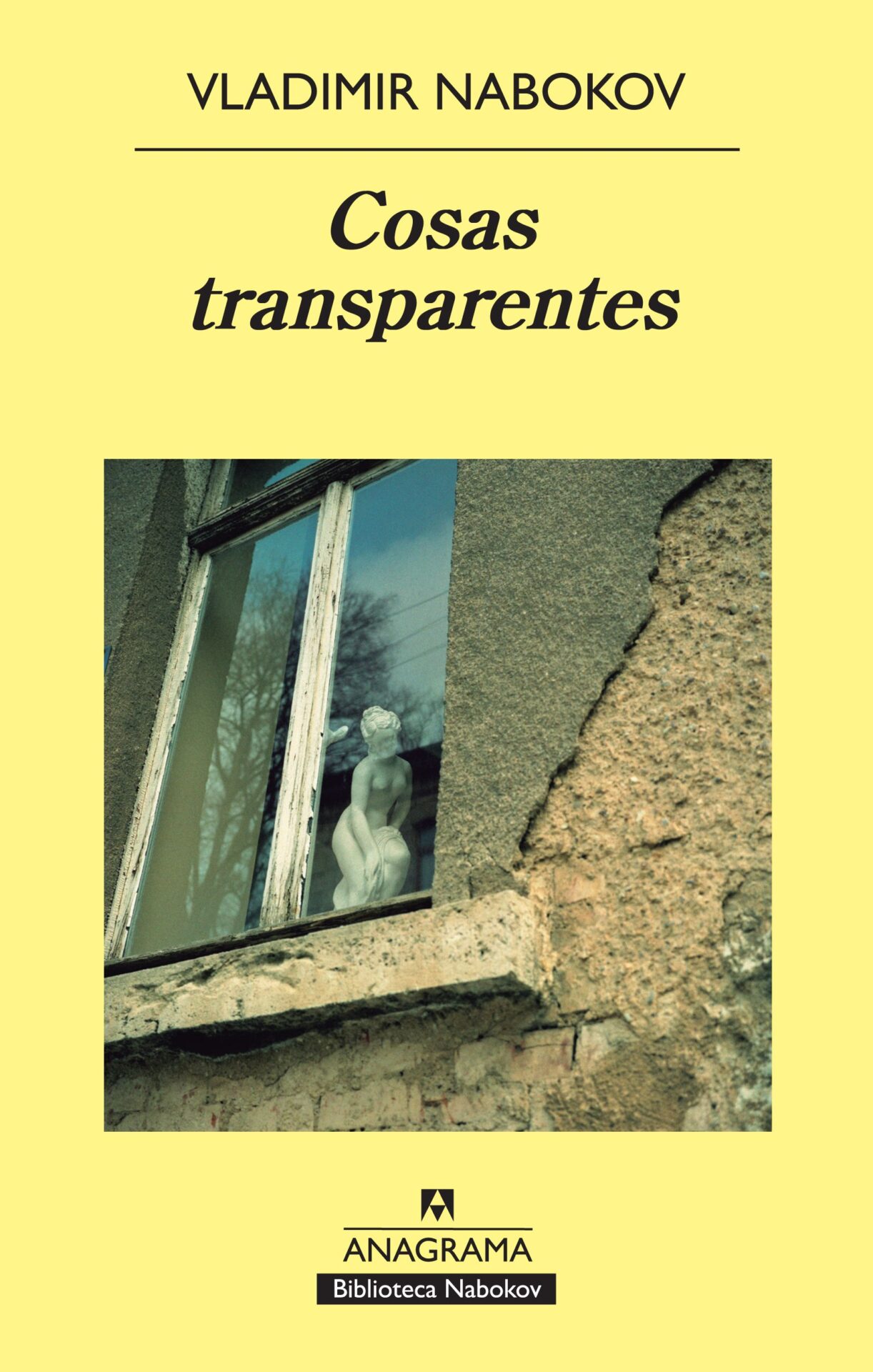 Cosas transparentes | 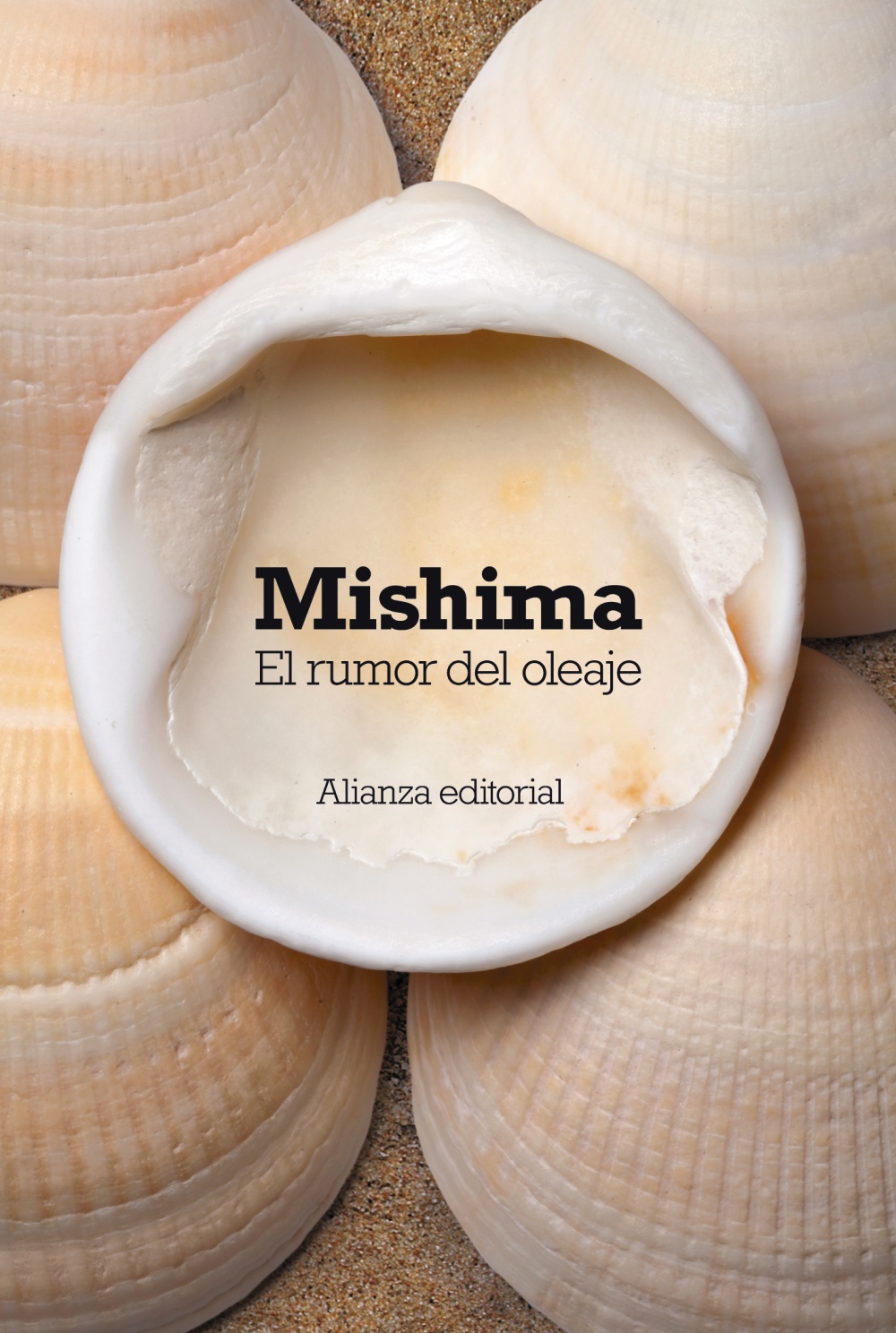 El rumor del oleaje | 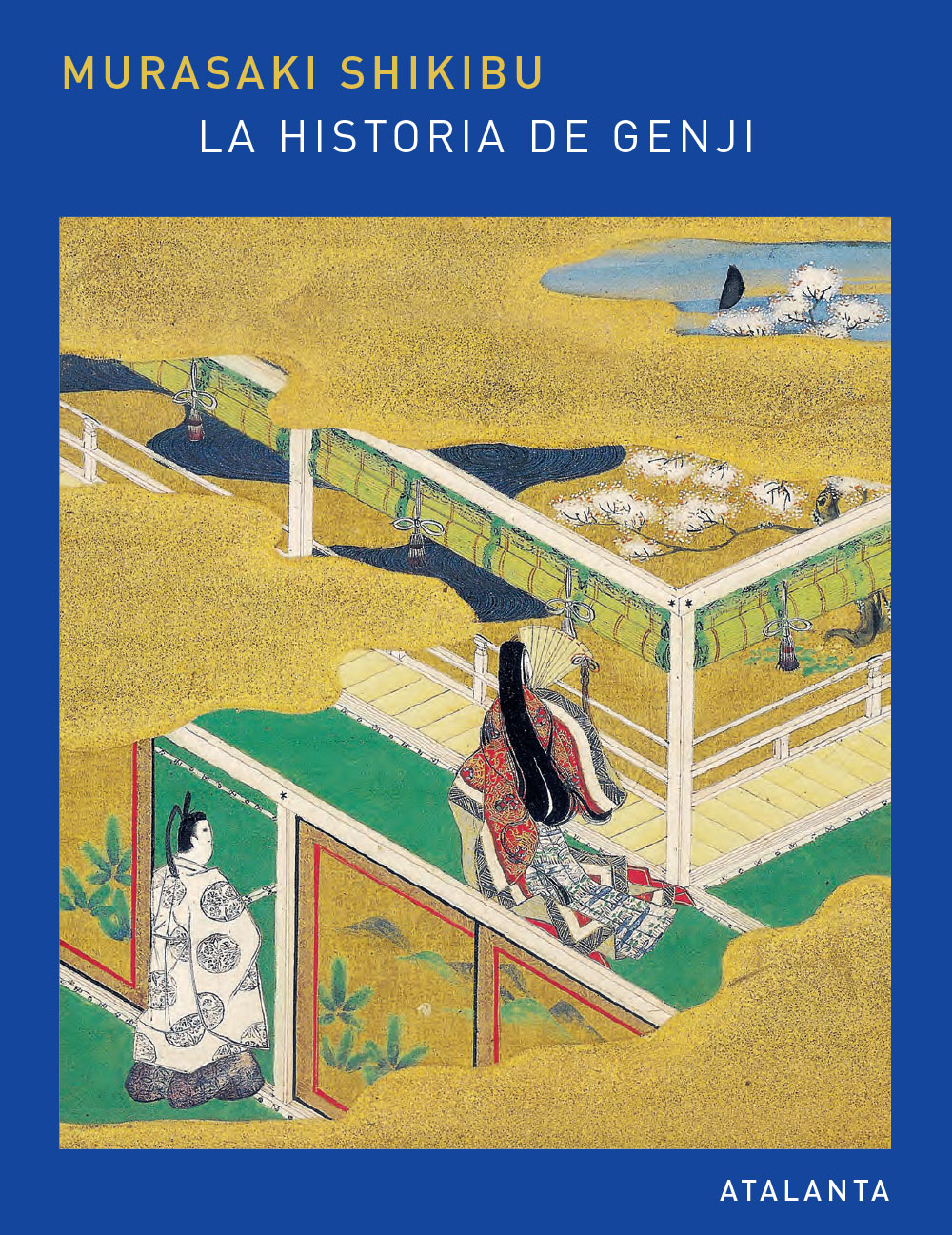 La historia de Genji | 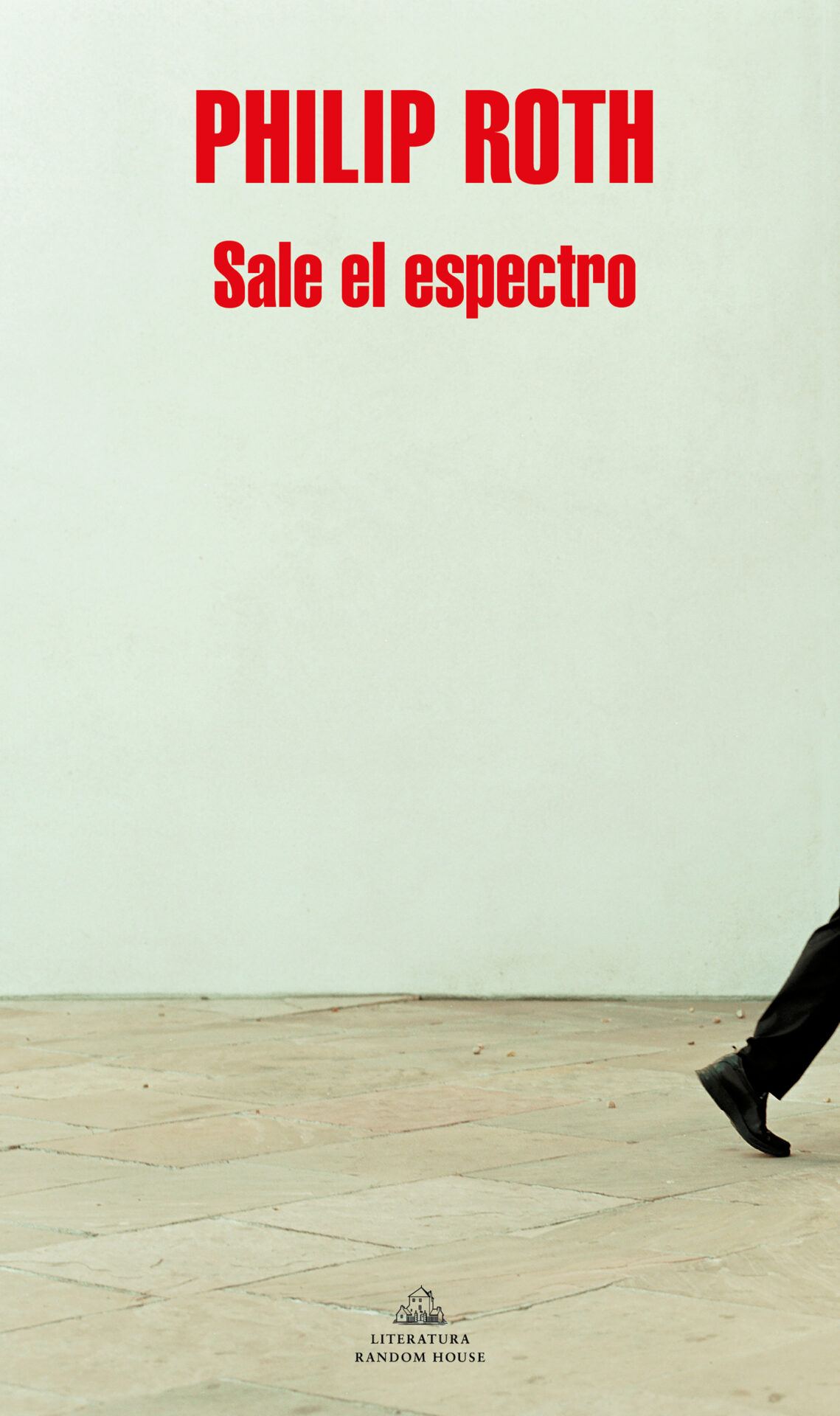 Sale el espectro |
Translations by Jordi Fibla: Cosas transparentes by Vladimir Nabokov (Anagrama), El rumor del oleaje by Yukio Mishima (Alianza), La historia de Genji by Murasaki Shikibu (Atalanta), and Sale el espectro by Philip Roth (Random House).
E.S.F-M.: In 2005, Atalanta published La historia de Genji (The Tale of Genji) by Murasaki Shikibu, one of the great classics of world literature. You were in charge of its translation. How did you tackle a labor of such magnitude?
J.F.: Someone who truly tackled the translation of a massive work—one written before El Cantar de Mío Cid, to give us some perspective, and in a language that even the Japanese, excluding experts, haven’t been able to understand for centuries without a modern translation—is Royall Tyler, an expert in the language of the Heian period (eleventh century C.E.). I merely translated his English text. That isn’t to say it was a walk in the park. I had to keep an appropriate tone while using as timeless a language as possible, making sure that in no way does it sound too current or too anachronistic. Tyler managed this, unlike the translators who came before him: Arthur Waley, whose enchanting prose describes a distant world with a tone one might use to describe the Victorian aristocracy; and Edward Seidensticker, whose version is a tad pedestrian, lacking the poetic tone of Tyler’s. Tyler even translated each waka so that the number of English syllables would correspond with the original Japanese meter. Like a haiku, a waka does not rhyme but has an exact number of syllables: 5-7-5-7-7. While the poems are formatted as two lines—because otherwise, the tome would be even thicker than it already is—if you divide any of them into segments of the number of syllables I mentioned, you get an authentic waka in English. This is not the case in my version. The text contains eight hundred poems, and forming authentic wakas in Spanish from the English translations was an impossible task, not even considering that I had little more than a year to complete the project before the deadline. As such, I forwent Tyler’s exquisite attention to detail and focused more on conveying the poetic tone of the waka, leaving meter to the side.
E.S.F-M.: Muchnick Editores published your translation of Junichiro Tanizaki’s The Key, which was later published by Siruela—another collaboration with Keiko Takahashi. You seem to have a special affinity for Japanese literature. Is that so?
J.F.: I do; I am interested in Japanese culture in general, and particularly its literature. I suppose I was one of the first Spanish readers to discover Haruki Murakami, given that I read Hard-Boiled Wonderland and the End of the World in English almost twenty years before Tusquets published it in Spanish. In 1976, I spent six months in Osaka, where I frequented the Nakanoshima Public Library and read English translations of Shusaku Endo, Osamu Dazai, Soseki Natsume, Seicho Matsumoto, Akiyuki Nozaba, Kobo Abe… My brother-in-law is an avid reader too, and we would often have interesting chats about literature with my wife as an interpreter. It’s a shame that after all these years, when we travel and are able to see one another, it is the same situation. He doesn’t know more than a half-dozen words in Spanish, and I can’t communicate beyond the exchange of a few simple phrases in Japanese, but we continue to talk about literature with Keiko as our interpreter.
E.S.F-M.: You have also played a big part in translating Philip Roth’s work. What can you tell us about the American writer? Out of all his work, which novels would you highlight?
J.F.: What happens to me with Philip Roth is the same thing that happens with Thomas Mann, André Gide, Henry Miller, Patrick Modiano, Julio Cortázar, and Vila-Matas: I am interested in their work as a whole. I know that all authors have books that are masterpieces, others that are less successful, and some that are dispensable, but that doesn’t matter to me with the authors I just mentioned. Whatever they may do—or have done—I am going to read their work and enjoy it, no matter its objective quality, if that’s a term we can even discuss in the arts.
I could say that the work Roth prefers above all his others, Sabbath’s Theater (El teatro de Sabbath), is my favorite as well. It is at the very least a novel I translated with much delight, despite the fact that it tells a sad tale, a joy only comparable to the one I felt while reading another work, not translated by me, The Professor of Desire (El profesor del deseo). But if I had to highlight one of his novels, I am inclined to choose another that I did not have the chance to translate, My Life as a Man (Mi vida como hombre), for a personal reason—a peculiar coincidence. While I read, I saw that I had not only read all the books mentioned in the novel—and there are many—but I had also underlined in pencil in my copies, from Thomas Mann’s A Sketch of My Life to Ernst Kris’s Psychoanalytic Explorations in Art, exactly the same quotes that appeared in the novel, though I had read them long before reading Roth’s work. I would argue that this is like one of those coincidences that only happens in a Vila-Matas novel.
E.S.F-M.: You have also translated the work of other North American writers, like John Updike, Thomas Pynchon, and Saul Bellow. Was it difficult to find a voice for each of them?
J.F.: The truth is, when you begin work on a book, you don’t search beforehand for a voice, a tone, a style, however you may want to call it. As I said before, intuition intervenes by itself, while the selection of a certain turn of phrase, a certain adjective, a particular way of rendering a metaphor, depends on knowledge of the language and the experience one has. It’s what I call profound intuition to distinguish it from the automatic form. It produces an effect similar to what happens with mirror neurons: the voice of the source language gives rise to the voice of the target language, adapted, as needed, to the linguistic peculiarities of this new medium.
E.S.F-M.: To close, I would like to ask if there is any author or specific work that you would especially like to translate.
J.F.: I would have liked to translate everything that has been published about and by Philip Roth after his death. I just read Baumgartner by Paul Auster, and I deeply regret not having the opportunity to translate it, without haste, but without pause. I would have loved to translate The Annual Banquet of the Gravediggers’ Guild (El banquete anual de la cofradía de los sepulturero) by Mathias Enard. There are countless books that I would have liked to translate. I read a lot in English and French (though not as much as I would like to, due to my declining eyesight), and every work I enjoy makes me want to translate it. In fact, reading a foreign text in its original language is the first step to a translation.
Translated by Iyan Smith Williams
Buy books by the authors and translators featured in this issue on our Bookshop page!