Editor’s Note: This article originally appeared in the Spanish edition of Letras Libres in April 2025. We wish to thank Daniel Gascón, editor of Letras Libres in Spain, for allowing us to share this text with LALT’s readers.
Álvaro Pombo, who received the Miguel de Cervantes Prize in April 2025, says that money is hard to get if you’re a writer. But a simple review of his career, full of numerous prizes, is enough to confirm that he has managed to make quite a good living, even if his mother accused him of being a spendthrift. A writer of enormous verbosity, despite being a latecomer (his fiction debut came in 1977, at the age of 38, with his Relatos sobre la falta de sustancia, although it’s true that he had already shown proof of being a poet before then), he seems to embody these words: “I write, therefore I am. Therefore there is an irrevocable world from the work and the grace of my words, of the words, of the verb that becomes flesh and dwells within us.” These words are from the narrator of El hijo adoptivo (1984), and they undoubtedly convey an experiential fact, a yearning for reality and survival through writing. Isn’t that—to exist—what any artist wants and what all of us want? To avoid being tarnished by the loathsome cold of unreality?
According to his friend José Antonio Marina, whom Pombo met at the college residence hall when both were new arrivals in Madrid, Álvaro Pombo’s literary work seems to be a lucid protest against the trivialization of living. This “lucid protest” is deliberately divided into two periods: one marked by the lack of substance and the other by reality, or as the author himself prefers, as it’s a more philosophical concept, that of religation. The first period ends with Los delitos insignificantes (1986), one of his most, and better, conversational novels where dialogue, apart from giving life to a minimal plot (the title is not deceptive), serves to reveal the soul of two characters sunk in a pool of failure. The second opens with El metro de platino iridiado (1990), a masterpiece through which to understand his poetics of goodness. From lack of communication and pessimism, from the bleak and the ghostly marked by the footsteps of T.S. Eliot’s “The Love Song of J. Alfred Prufrock” (“I should have been a pair of ragged claws / scuttling across the floors of silent seas”), which preside over narrations not so much realistic but rather of “psychology-fiction,” to an open literature, with ethical aspirations, celebratory, touched by the fury of Rainer Maria Rilke, an incessant invocation of the invisible. In short: nurturing a lack of substance with substantial servings of light, as Simone Weil aspired. Or at least trying to do so.
The oeuvre of our Cervantes prize-winner is, let’s be frank, one of the most profound and original in the Spanish language. This literature of the ego (not to be confused with autofiction or anything like that, although settings and characters are often taken from his own biography) delves from a brooding starting point into the intricacies of the characters, their areas of light and shadow, of good and evil, to unfold into a world of subjects and voices that coin the bas-relief of the human condition. The attention that one human being pays to another is worth a lot, says Pombo. And all his artistic work seems governed by this noble endeavor: listening to the hearts of our peers. Attention that reaches its highest expression in the unique art of the novel. In his case, as we have already noted, it is an intellectual novel, combining psychological analysis (The Wings of the Dove by Henry James is one of his three favorite works, the other two being The Notebooks of Malte Laurids Brigge, again by Rilke, and The Fallen Idol by Graham Greene) and philosophical reflection in an uncomplicated existentialism, without fear of taking the narration into speculations on guilt, sin, sexuality, lack of meaning, the unbearable lightness of being, temporality, and the search for personal ethics and for an unconsciousness that elevates us to a certain idea of holiness. There is a reason why many of his characters are philosophers or members of the clergy; there is a reason why his novels are full of references to thinkers such as Søren Kierkegaard, Jean-Paul Sartre, Saint Augustine, José Ortega y Gasset… The treatment of homosexuality—an essential element for Pombo—and how it fits within Christianity he learned in The Bell, the Iris Murdoch novel he read over and over during his long London nights.
This host of issues is expressed (literature is expression, says Croce through the mouth of Borges) through a flexible yet dense, very personal prose, with an oral and dialogic nature, rich in linguistic nuances, derivations, neologisms, colloquialisms, abundant in images, in contrasts, in word play, interspersed with humor, melancholy, and lyricism. Here is a sample of his impressionist brushwork: “He bought tobacco and walked down to University City. A great sunset of orange sun, thunderous. From the terrace of the chapel at University City, one could glimpse the blazing Guadarrama, surging from that bloodless glory of vermilion, purplish and pink, pink rivers of sugary pollution, configurations of stratified clouds, fleeting, like the momentary illusion of fullness and finishing that Ortega experienced right now.”
Whether in Madrid or in his native Santander (Santander, 1936 is the name of his penultimate novel, a new and brilliant example of an approach to the other synthesized in a father and son with opposing ideologies), sometimes baptized with the name Letona, outdoors or in the inner world of the home, Pombian characters, like smoke spewed out by the chimney of time, are prone to letting themselves be carried away, to losing themselves in their ethereal dreams. And at the bottom of the sea. Always the sea. In the inlet of Puertochico or among the trees of the Retiro. The sea, the sea. Symbol of fullness. Its immutable presence, its mythological breathing, the secret of its abyss. Desired and desirable sea. That past and future sea that our Pombo has managed to reach in the present.
Translated by Lori Gerson
Published in the Spanish edition of Letras Libres (No. 283, April 2025) as part of “Conversaciones Globales”, a project supported by Open Society Foundations.
Buy books by the authors and translators featured in this issue on our Bookshop page!
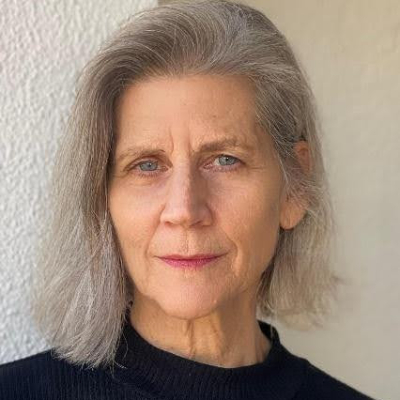
Photo: Spanish writer Álvaro Pombo.