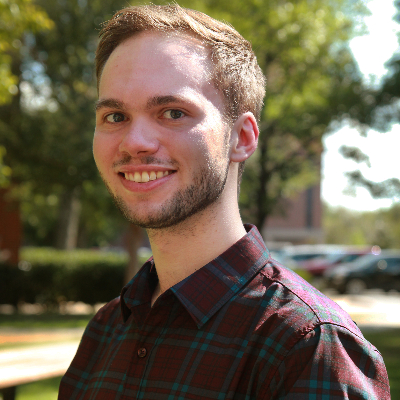
The Colombian author—a victim of an attack in Dnipró (Ukraine) along with four other people while traveling through war zones in 2023—provides us with an emotional account of that experience of life and death: of questions and despair, of words that fall short, and of a literature compelled to tell the untellable.
In Ahora y en la hora (Alfaguara, 2025), Héctor Abad Faciolince writes of the beast that awakens when man dies; of “the strange beauty of sad things” in the midst of brutality; of the Ukrainian writer Victoria Amelina, whose life became a long line of funerals; and of terror “as a weapon to break a people’s morale.”
After being invited to the Arsenal Book Fair in Kyiv in June 2023, the Colombian writer accompanied the “¡Aguanta Ucrania!” initiative as they traveled through parts of the war-torn country. There he met Amelina—then working as a war-crimes investigator—only to witness her death in the attack that Abad Faciolince and others managed to survive. For the author of Memories of My Father (El olvido que seremos), writing became the only way to process what had happened: “Only if I tell it will it stop being horrible.” For this reason, today Victoria lives on in him and drives his writing of a book that seeks to give her a second chance, to lend a voice to that forlorn-eyed woman whose own voice had been destroyed by war, for war “devours the coherence of the plot / devours coherence / devours.”
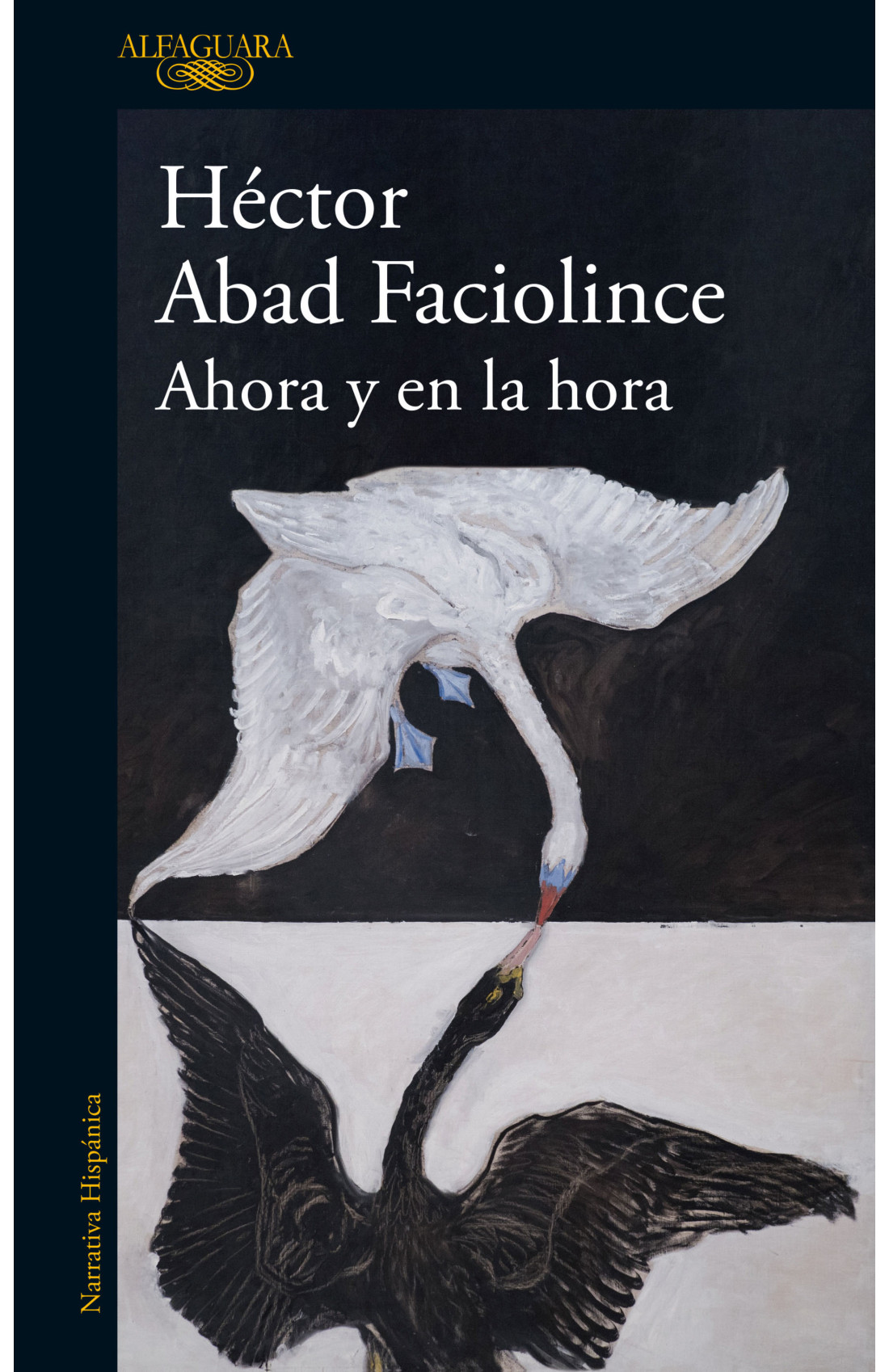
Alfaguara, 2025
Natalia Consuegra: When I read Ahora y en la hora, I thought of Salman Rushdie, specifically of that moment he writes about in Knife when he realized he wanted, and needed, to write about the attack he had survived in New York in 2022. You once said, “Perhaps if I write about it, I can understand; only if I tell it will it stop being horrible. I write to learn how to die.”
Héctor Abad Faciolince: I didn’t take that trip to write a book. In fact, around that time I met with Javier Cercas, who told me that the Vatican had invited him to Mongolia to write El loco de Dios en el fin del mundo. I told him that I couldn’t write something like that—I hadn’t gone to Ukraine to write any book. I was very unwell; I wanted to stay quiet, I couldn’t take it, I wanted my mind to start the process of forgetting. Then Cercas said to me: “You have to write it. Start right now with some sort of article, send it to El País, to El Espectador, anywhere.” So, because I’m very obedient, I wrote one. In fact, it was that same obedience—and my inability to disobey—that drew me to eastern Ukraine in the first place. I wrote an article for El País and began reading Victoria’s work compulsively, everything of hers I could find, including a novel that had just come out and had been brought to my house practically at the very moment of the attack. My children, my wife… they were all very affected, and in part offended, though lovingly so, that I had exposed my life in that way.
N.C.: It seems you were going through a very difficult time.
H.A.F.: And there were so many things running through my mind—some more realistic, like post-traumatic shock or the depression of having lived through this—but what weighed on me most was the guilt that others much younger than I had died, namely Victoria. That’s when I began to feel the responsibility to listen to Cercas’s advice and write the book however I could. I got to jotting ideas down in my notebooks, but nothing came to me. Meanwhile, Hamas’s attack on Israel took place, followed by Netanyahu’s criminal act of revenge in Palestine. That also affected me deeply. And when Iran launched a massive bombing strike against Israel, I thought it was the start of World War III. I also become obsessed with the idea of doing something for Ukraine—through writing, yes, but also by sending coffee there. I started looking for coffee-growers in Colombia who would sell me cheap coffee, or even donate it, but I couldn’t find any. I was all over the place, a crazy old man looking for coffee, and then it occurred to me that I could write a book about a crazy old man trying, by any means possible, to take food to Gaza.
N.C.: Were you able to write any of that?
H.A.F.: I started writing a novel about a crazy old man who wants to take food to Gaza through a hidden tunnel in Egypt. I was discussing with some friends about whether to write a novel or a chronicle about the experience. Fernando Trueba said to me, “Do both, the chronicle and the novel.” But Juan Gabriel Vázquez and one of my editors, Sebastián Estrada, said, “No! It should just be a chronicle of what you experienced.” So, I spent a year and a half trying to do both: some weeks I would write the novel; others I would work on the chronicle—but I was unhappy with both. I had everything in the same file, alternating between one chapter of the chronicle and one of the novel, and one day—I don’t know what happened—but I messed something up on my computer, and the whole file got deleted.
N.C.: What bad luck!
H.A.F.: It truly was. I was already depressed and confused, but this left me in despair. I felt as if I’d lost something precious. I’d never felt that way before. While I still had the file, I thought it was garbage, but once it was gone, I felt like I’d lost work that was actually worth something. So, in desperation, I called my editor in Madrid, Carolina Reoyo, and told her what had happened. She spoke with a technician at Random, who gave me some instructions, but I didn’t know how to do any of that—it’s the kind of thing only younger people understand. In the end, we were able to recover it, and I thought, “If I felt such anguish—if I was at the point of calling Carolina and saying ‘save my life’—after a whole year of what I thought was worthless work on a book that just wouldn’t come together, and losing it made me feel that awful, then maybe it really was worth something.”
N.C.: Did you have a set deadline with your editor?
H.A.F.: I had to turn the book in by 2024, so I kept going and writing. On December 31, I turned in my “double” book—a mix of fiction chapters and others that were more like chronicles or essays. My wife, who is also an editor at Angosta, told me very bluntly: “The fiction part doesn’t sound like you; I don’t recognize your voice, and that’s really bad.” My editors—Carolina Reoyo in Spain and Carolina López in Colombia—told me much more delicately and with great care: “Let’s just keep the real part.” I turned it in on December 31, but on December 29, my first grandchildren were born prematurely and were in intensive care. So, I told them: “Do whatever you think is best, but I can’t do anything else right now. If you need to amputate that limb, go ahead, but I can’t operate on myself right now.” So they performed the amputation, and here it is.
N.C.: There’s something that runs through the book without being its central core or purpose: the way you honor language. You speak of its strangeness, of feeling wordless, of how the language failed to emerge—but also of how words are magical, and how you wanted them to become realer things. In the end, you talk about unleashed writing.
H.A.F.: That’s especially important, because this was a fight against silence. Jorge Semprún said that after something very hard and tragic, the great temptation is to stay silent. This happened to me, particularly because everyone in my family was very hurt by what had happened. I felt guilty and thought, “I’m very good at forgetting, so it’s better to stay quiet, head to my little farm in La Ceja (Antioquia), walk, meditate, think, look at the two calves out there, lose myself in nature, and try to forget.” That was one impulse; the other was to find the words, but they just wouldn’t come. I found it terribly difficult, and I thought I would never find them.
N.C.: That must have been a tremendous blow as well.
H.A.F.: On top of all that, I was depressed and had to see a psychiatrist, who prescribed me antidepressants. All of this also made it very hard to concentrate, so I truly felt that language was abandoning me, that maybe old age had struck me from the worst possible angle for a writer: losing the gift—the one he thinks he has or maybe actually does have—of language. But I kept struggling to find the words; I would go back and start again, back and start again, always looking for a tone, a voice, time and time again. I was never sure whether I had achieved it or not. When I sent the “double” file to my editors, I told them: “It may be that the fiction and nonfiction parts don’t work together, or that neither works at all. If that’s the case, it doesn’t matter; I can’t do anything else with this book, and even less now, with my first grandchildren.” And then, a remarkable transformation happened: I let go of the book. I stopped feeling the responsibility to tell the story; I decided I wasn’t going to work on it anymore, I wasn’t going to think about death anymore; instead I would think about my grandchildren and their future. I gradually tapered off the antidepressants, and all of a sudden, I was okay. This happened in December, and I started to feel well, better and better each day, and I even felt like I could finally play with words again like I could before. I felt as if I’d had cataract surgery and were seeing clearly again.
N.C.: Specifically, thinking about what writing allows us to do—that ability to see—you say that Victoria “peeled back stacked layers of stories and paint to tell the story of her homeland.” I believe you did something similar with this book, using different modes of narration that reveal bits of poetry, short essays, snippets of chronicles, lots of metaphors, touches of fiction, and the contextualization of the conflict, of Ukraine…
H.A.F.: When you say, for example, that there are passages that feel like fiction or like a novel, it’s because Carolina López rescued some of the original fragments of the novel on Gaza. She said, “We aren’t going to include the novel, but I’m going to salvage a few pieces that could work for this one.” Because I was doing so poorly, truly never before had my editors—and in particular, a single editor—been so important for one of my books, nor had they done so much work. The book is what I turned in, but in a way, it’s almost as if Carolina had received a puzzle in pieces, because the order of the final book is quite different.
N.C.: Maybe she grasped what wasn’t even clear to you yourself?
H.A.F: She caught that coherent structure, one that doesn’t feel fragmented or disjointed. I also saw it in my reading of the final version, but I had never seen that structure in what I had originally written. She was just coming out of cancer treatment, and with great love and generosity she took on those scattered pieces as her first task after getting better; she took it as part of her own recovery as an editor, and it was very moving. What I’m about to say will sound like the same exaggerated line that anyone would put on a dedication page, but I say it with absolute conviction: this book would not exist as it is if it weren’t for her.
N.C.: What happened to the fiction?
H.A.F.: That part disappeared thanks to the influence of people like my wife and Carolina. The book began with, “I caress the air around me as if it were the ghost of my dead daughter”; now, that part comes much later. I accepted the structure that she gave the book, and I can tell you she did an extraordinary job. This is a collective work, even though only my name appears on it. And I’ll say something more: I don’t believe in ghosts, but I do think I was able to concentrate on writing certain parts because I trusted that Victoria was dictating them to me. It’s fiction, of course, but I felt that she was dictating to me, and I let her.
N.C.: In the Ukrainian conflict, as in so many wars, questions of cultural, political, and social identity form part of the backdrop. You tell us that while Victoria was educated to be Russian, her identity emerged precisely from rejecting that upbringing and establishing herself instead as someone born in the young nation of Ukraine. How do you interpret this theme of identity and the idea of nationality, which can sometimes become so dangerous?
H.A.F.: Until this direct experience with Ukraine, I had always been an absolute antinationalist; I always defended the idea that there are no collective identities, that identity is something one constructs as an individual. I have defended above all cosmopolitan ideas—those that unite different peoples, that try to set aside differences and highlight affinities, as Borges said. But with the war in Ukraine, I realized that there are hidden forms of nationalism and impositions of identity, and that the largest and most powerful countries attack any sort of nationalism that differs from their own, which is a brutal process. In the Soviet Union, all nationalism was prohibited—there was fierce propaganda against it—but that merely concealed the vast machinery of Russian nationalism, its language, its imposed model. Something similar happens in Spain, a country I care for deeply, which despises all nationalisms, but not the Spanish right wing, much less Spanish nationalism itself. Trump opposes any country defending its own interests, but he certainly doesn’t oppose his own, and in fact, he imposes his interests upon others.
N.C.: Do you still consider yourself an antinationalist?
H.A.F.: I do, but I also understand what countries, nations, and minoritized languages feel when confronted with the dominance of imperial powers—their countries, their economies, and their languages. English, Spanish, French, Russian, and Chinese are enormously powerful and overwhelming. For example, throughout my life—which has by no means been short—I’ve often seen in the paper news of yet another indigenous language disappearing in Colombia. And I think the world’s beauty lies precisely in its variety: in its many languages, its many types of food. It may be that bread is better or tastier than arepas, I don’t know, but what’s wonderful is that we live in a world where both bread and arepas exist. It’s wonderful when countries preserve their culinary traditions; a hamburger may be delicious, but dishes like sancocho, ajiaco, and frijolada can’t disappear, because they are such elaborate, slow, difficult things to make. So, when it comes to defending certain things that are presented as national or identity markers—things that, for the longest time, struck me as tedious or a little ridiculous—I suddenly find myself feeling more sympathy and understanding. More and more, I’m bothered by the idea of a central power that dictates everything. I think all the “small ones” need to have a voice and a way to defend themselves against the most powerful, at the individual level and globally among all nations.
Translated by Iyan Smith Williams
Photo: Colombian writer Héctor Abad Faciolince at the 2023 Miami Book Fair, by Alberto E. Tamargo/Sipa USA/Alamy Live News.