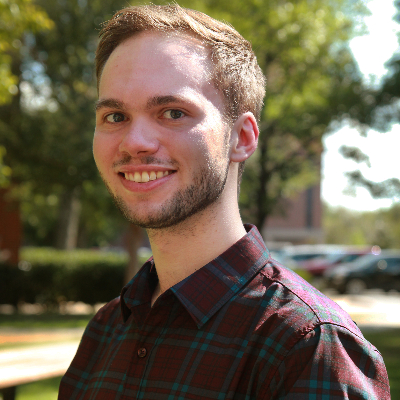
Jacobo Fitz-James Stuart y Martínez de Irujo, Count of Siruela (Madrid, 1954) has worked in publishing since 1980, when he released a Spanish-language edition of the fifteenth-century medieval novel Le Morte d’Arthur (La muerte de Arturo). Two years later, he founded the publishing house Siruela, launching its journey with Sir Gawain and the Green Knight (Sir Gawain y el Caballero Verde). Over time, authors as important as Robert Walser, Italo Calvino, and Cees Nooteboom joined Siruela’s catalog. In 2005, after leaving Siruela, he founded Atalanta alongside Inka Martí to “continue an editorial work and philosophy that defends the care of the book, both in its content and form.” He is the author of the essay El mundo bajo los párpados (2010) and the anthologies Vampiros (2001 and 2010) and Antología universal del relato fantástico (2013). From Vilaür, in the province of Girona, he has transformed Atalanta into one of the most prestigious publishing houses in Europe.
Eduardo Suárez Fernández-Miranda: “Although it’s difficult to explain the immense complexity of this profession and the many elements that must come together to give the concept of ‘editor’ a truly legitimate and positive meaning, it’s often the case that some irrational factor tears down all planning and rational thought; a state of permanent uncertainty and tension prevails, and it becomes an endless source of both satisfaction and disappointment.” Do you agree with these reflections by Kurt Wolff on the work of an editor?
Jacobo Siruela: An editor is always a risk-taker, and the source of all his successes and setbacks lies within the very nature of the profession. In my case, I also chose to align myself with the craft of the book itself. I became involved not just in what is communicated, but in how it is communicated. And so, to the passion of the literary and conceptual risk-taker, I added the passion of the artisan.
E.S.F-M.: Kurt Wolff speaks about the satisfactions and disappointments of being an editor. Since founding Atalanta in 2005, what moments have brought you the most satisfaction?
J.S.: Without a doubt, our greatest joy came from the immediate success of Atalanta’s first four books—above all, Patrick Harpur’s groundbreaking essay and The Tale of Genji (La historia de Genji), the first novel written by a woman, from the tenth century. And, in general, an editor’s well-being comes from publishing what you want, regardless of whether it’s commercial or not, and from seeing your proposals understood and savored. Or, sometimes, it comes from someone approaching you on the street smiling to thank you for the books you publish—an act which goes straight to the heart.
E.S.F-M.: This year marks one hundred years since the death of Joseph Conrad. Atalanta started the Ars brevis collection with The Secret Agent (El copartícipe secreto). Why did you choose this work to launch the collection?
J.S.: It’s one of the best mature works by one of the greatest modern writers, and it hadn’t ever been published in Spain. I really don’t remember the exact details, which, in any case, are of secondary importance. But, in Conrad’s work, psychological depth and subtlety always meet with the twists and turns of the adventure novel—a unique combination that he always presents with great literary style.
E.S.F-M.: Ars brevis is a collection that primarily publishes books of short stories, including works like The Houses of the Russians (Las casas de los rusos) by Robert Aickman; Fairy Tales (Cuentos de hadas) by George Macdonald; and What the Maid Saw (Lo que vio la criada) by Yasuka Tsutsui. Today, do you see a potential revitalization of the short story?
J.S.: I’m not sure. I live my life on the margins of general trends and focus on the short story, on the short form—which, when it achieves the extraordinary, for me, is irreplaceable. But the short story demands a more engaged reader; the effort that a novel asks of the reader is confined to its first twenty pages. On the other hand, with short stories, this effort must be made anew with each reading of every story. Also, my favorite twentieth-century author is Borges, a master of the short story. So, the short written form, like poetry, has always been one of my most deeply rooted passions.
E.S.F-M.: This collection also includes anthologies like A través del espejo, El lector decadente,andPoder del sueño. As an editor, what do you think makes a good anthology?
J.S.: I suppose the quality and literary originality of the selected stories. But, in any case, a good anthology is one that—in the best possible way for both the anthologist and the reader—delves into a topic of interest, brings order to the material, and allows both reader and editor to continue enjoying its content.
E.S.F-M.: Another of Atalanta’s collections is Memoria mundi, which includes such relevant pieces as The Carnal Prayer Mat (El erudito de las carcajadas) by Jin Ping Mei and The Tale of Genji (La historia de Genji) by Murasaki Shikibu. You seem to have a predilection for East Asian literature. Is that so?
J.S.: It isn’t just East Asian cultures that captivate me; I’m drawn to cultures of all eras and places of the world. The key is to be constantly broadening and deepening your perspective. Limiting yourself to the contemporary alone is a form of cultural provincialism. Had I not edited these two marvelous books, maybe nobody would’ve ever dared to do so, given their length and the difficulties of translating them. It is arduous, risky work. But I have always liked to go against the grain in certain areas, testing things for myself to see if what people say is true.
E.S.F-M.: Atalanta includes in its catalog what Luis Antonio de Villena calls one of the “most famous and extraordinary” autobiographies of Western literature: The Story of My Life (Historia de mi vida) by Giacomo Casanova. The work consists of two volumes of almost two thousand pages each. How was the process of editing this text?
J.S.: Casanova’s La historia de mi vida is an autobiography of eighteenth-century Europe; no other work seems to capture the essence of a century in quite the same way. In this book, the author travels to different countries, experiencing all manner of adventures through which he creates a vivid portrait of human life from three centuries ago. It’s one of the richest and most unforgettable books of the European tradition. Now, as the literary landscape becomes ever more focused on the contemporary, it’s essential to expand our horizons by visiting worlds past—so long as they have something new to tell us.
E.S.F-M.: Atalanta has distribution in Latin America, particularly in Mexico, Argentina, and Chile. Could you tell us, broadly speaking, what texts interest readers on the other side of the Atlantic?
J.S.: Above all, Campbell’s books, as well as editions of the classics. Essays sell more slowly, but because they deal with hot topics that are rarely addressed, they eventually sell out as well. In general, almost everything in the catalog eventually sells, little by little.
E.S.F-M.: On September 19, 2020, you signed—along with other independent publishers—the Declaración de Formentor. Among other things, this text asserts that “in a time of significant change as publishing houses are absorbed by large groups, independent publishers are increasingly becoming an essential element of the literary ecosystem.” Four years have passed since then. Do you believe the situation of independent publishers has improved?
J.S.: No, but what’s most important is that the everlasting calling for books remains very much alive, and new independent publishers keep appearing that enrich today’s literary ecosystem, as you called it.
E.S.F-M.: Tell me, in your case, what defines each of your collections?
J.S.: Well, there’s Ars brevis, a collection of short stories—some of which are aphorisms—that now includes nearly thirty published books. Then, there is Memoria mundi, dedicated to unique works of memory, such as Gibbon’s The History of the Decline and Fall of the Roman Empire (Decadenica y caída del imperio romano); the two volumes of that strange sixteenth-century Chinese erotic novel, The Carnal Prayer Mat (El erudito de las carcajadas); The Tale of Genji (La historia de Genji); and Casanova, among others. But, without a doubt, Atalanta’s most unique collection is Imaginatio vera, which develops the concept of imagination in a theoretical and narrative manner—not as an elusive fantasy, but as a true internalization of our deepest subconscious. And, finally, we have the most recent collection, Liber naturae, focused on understanding nature in the twenty-first century.
E.S.F-M.: On the copyright page of Atalanta’s books, you appear as both director and designer. How do you go about choosing each book’s cover? Do you have a method?
J.S.: My method consists of looking and searching—both in real life and online—until I find the image that best resonates with the book’s theme. The image should never be gratuitous; it must be beautiful and full of meaning. It’s not easy work, but it’s very stimulating. I have always felt connected to images and fascinated by them, and this thoroughly satisfying exercise is proof of that. Then, once you have the image, you have to make it harmonize as much as possible with all the other visual and typographical elements on the cover. It’s delightful work.
E.S.F-M.: Atalanta takes great care with the books it publishes—the paper quality, typography, covers… Books are often sent back from bookstores to the publisher and then sent out again, and in all that back-and-forth, the book stops being that impeccable volume that left the warehouse for the first time. What can be done to make sure that a copy reaches a reader in the best condition possible? Shrink-wrapping, for example?
J.S.: Shrink-wrapping is, of course, a good way to prevent wear and tear. But a hardcover is the best guarantee of a book’s durability.
E.S.F-M.: In 2000, you left Siruela. What was it like to leave a publishing house you had created, and which had published authors like Italo Calvino, Robert Walser, Amos Oz, and Cees Nooteboom? Does anything from Siruela remain in Atalanta?
J.S.: In all honesty, it was liberating. After twenty years of intense work, I wanted to free myself from the routine of the publishing world and its stress. I wanted to leave Madrid, retire to Ampurdán—a beautiful and civilized area—and start a new life focused on writing and studying the subjects that interest me, far from the hustle and bustle of the city. There I met Inka, we got together, and after three years, we opened a new publishing house that releases seven books a year, with the sole intention of enjoying knowledge and literature and encouraging others to do the same.
E.S.F-M.: Is the Siruela catalog still active? How do you view the publishing house?
J.S.: I follow Spanish publishers very little. Most of the books that I buy are foreign. I don’t really keep track of Siruela’s books, except when I happen to come across one. And I see that, after more than forty years, the publishing house is still going strong—which is something worth noting.
E.S.F-M.: You hold the title of Count of Siruela. Nowadays, what do you think is the role of the aristocracy in Spain?
J.S.: The aristocracy is part of the past. Today, there are no “social classes” in the sense of how they existed up through the nineteenth century. So, it no longer has any concrete role, which is no great loss. The world changes; that is its nature. In my case, I accept my condition as Count quite naturally—just as one who accepts being Basque or Catalan—with no greater commitment on my part than taking good manners and elegance as models of conduct. But I belong to the Republic of Letters, and that is why my title has become the emblem of a publishing house. Such is life.
E.S.F-M.: To conclude, we’d like to know what books you have in mind for the near future.
J.S.: This fall we will release the intense final work of Peter Kingsley, Catafalque (Catafalco). Also, the first work of European philosophy, written in the seventeenth century by a German cobbler, Jacob Boehme, titled Mysterium Magnum (El mayor de los misterios). And an insightful interview by Joseph Campbell, titled Myth and Meaning (Mito y sentido). All of them are centered around the essence of the mythical, which is the deepest poetics we have inherited.
Translated by Iyan Smith Williams