Hablemos, escritoras: Episode 502
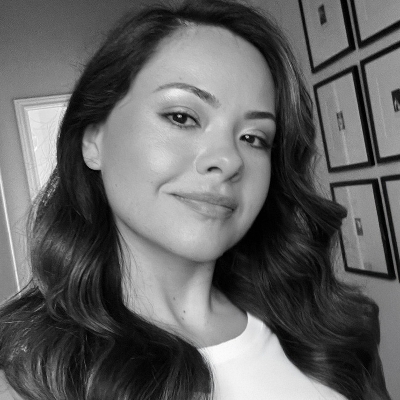
Emma Sepúlveda—a Chilean writer, educator, politician, and activist based in the United States—is a pioneering figure for Latina women in the United States and in Spanish-language literature. She was nominated by President Barack Obama to serve on the Fulbright scholarship selection committee, becoming the first Latina woman selected for this position. She ran for the Senate in Nevada and founded the Latino Research Center. As a researcher, she has explored significant and heartbreaking moments in Chilean history, such as the tragedy of the thirty-three miners trapped in a mine in northern Chile, as well as the establishment and consolidation of the clandestine detention center Colonia Dignidad. We had the opportunity to interview her and talk about her book Cuando mi cuerpo dejó de ser tu casa (Editorial Catalonia, 2022), which Argentine translator Denise Kripper has translated into English under the title When My Body Ceased to Be Your Home, published by Literal Publishing and Hablemos, escritoras.
This is an adapted excerpt from the conversation on the Hablemos, escritoras podcast, hosted by Adriana Pacheco.

Adriana Pacheco: Welcome, Emma. Thank you so much for joining Hablemos, escritoras.
Emma Sepúlveda: Thank you very much for the invitation, Adriana, and it will be a pleasure to speak with you from Spain this afternoon.
A.P.: From Spain, from Valencia. But you lived in the United States for a long time, right?
E.S.: In Nevada, exactly. Forty-seven years in Nevada, where I was a professor at the University of Nevada in Reno, a political activist to the core, and, well, I wrote; I spent almost most of my life writing.
A.P.: How wonderful. I know you’ve had an active life in politics. How did that come about, Emma?
E.S.: Look, I was always very involved in politics from the time I was very young at the Universidad de Chile in Santiago. I left Chile after the military coup of 1973. And when I arrived in the United States, although I still didn’t speak much English, I became very interested in getting involved in everything that had to do with empowerment, specifically of Latinos, because I realized that they were a minority-majority group, especially in Nevada. I started at the most basic level: registering people to vote and participating in political campaigns for other candidates.
Later, I remember a phrase that kind of changed my life: “Democracy is not a spectator sport.” So there came a moment when I said: no, I can’t stay on the sidelines; I have to get more involved and try to be a voice for the people who don’t have a voice in our community. I was fortunate enough to win the primaries, but I lost the general election. It was very difficult, as you can imagine, because of course I have an accent when I speak English and as soon as they looked at me they knew I wasn’t from the United States. Also, it was the year 1994, when an anti-immigration movement was already beginning in California with Governor Pete Wilson. It was a very difficult campaign. I even wrote a book about it that is included among biographies of Latinas in the United States. There I was able to talk about what had truly been a brutal campaign, with death threats; we had to have police protection. It was a tough campaign, but I learned so much.
A.P.: How brutal, how intense, Emma. Tell us, during the time you were in Nevada, how was your experience with the literary scene in that part of the country?
E.S.: Well, it was very difficult—like climbing a huge mountain. First, because I’ve always written most of my books in Spanish. I’ve published several books in English, but in Spanish I feel much better, more confident, more creative. And it was complicated, because in those years—just think, I began publishing in the 1980s—there weren’t many publishing houses dedicated to publishing books in Spanish. I even remembered the other day that in Nevada there was a competition to financially support writers. The first time I applied for any kind of government grant my application was rejected because the book was in Spanish. It wasn’t easy.
A.P.: I can imagine. You’ve also published nonfiction and research on Latino issues, right? For example, at the Latino Research Center where you were in charge, correct?
E.S.: Yes, I founded the Latino Research Center at the University of Nevada, Reno, and from there we also produced a literary journal, Border-Lines, dedicated exclusively to research on Latino topics.
A.P.: If there’s no political interest, there’s no funding and research doesn’t move forward. I imagine you also had to work on fundraising and bringing more people into the fold, right?
E.S.: Of course, it was difficult, because with these anti-immigration movements many people refused to put funds toward research on the living conditions of Latinos and didn’t realize that it was really all connected. For example, with “English only” policies. I always tried to explain that it wasn’t just about giving Latinos the possibility of having an interpreter in court, but that this also helps the Anglo population.
A.P.: Right, right, absolutely. Well, you were chosen by President Obama to be part of the Fulbright committee. Many congratulations, Emma, what a great distinction.
E.S.: Yes, I think it has been one of the great honors of my life. First, to have met President Obama, whom I admire. I even wrote a book about Latinos and Obama as well, but he is a person I have always admired, ever since I learned about this senator who was going to run for president. Meeting him and being nominated by him to this committee of only twelve people in the entire country was one of the great honors of my life.
Above all—having been the first Latina in the history of Fulbright, representing my people and, at the same time, having been part of this bridge that connects the United States with other countries in the world—the possibility of carrying this message about the importance of education to other countries was a great honor.
A.P.: Emma, you publish with a publishing house that we care about very much at Hablemos, escritoras, which is Editorial Torremozas, another pioneer in only publishing women writers. There you have released Tiempo cómplice del tiempo and Los límites del lenguaje. Tell us, what did it mean for you to work with Torremozas and for these books to be published by them in particular?
E.S.: It was wonderful to meet Luzmaría Jiménez Faro, an incredible woman who helms the publishing house. It wasn’t easy to publish in Spanish in the United States. I sent my book of poems to the press and immediately received a letter saying: “Of course we’re going to publish it and we hope you’ll come to Spain for the launch.” All of that was wonderful; being able to find a home for women writers at a time when it was impossible to publish in the United States. I believe Torremozas opened a path for women not only in the United States, but also in many countries in Latin America.
A.P.: In 2017 another book came out called Setenta días de noche: 33 mineros atrapados: historia oculta de un rescate, where you also speak about the testimony of women from when this tragedy occurred in northern Chile. Would you like to briefly tell us about this book?
E.S.: Yes, previously I had written or put together a kind of anthology, but I wrote an extensive introduction and conclusion about the women who were searching for their children, husbands, and missing relatives after the military coup of 1973 in Chile.
I went to Campamento Esperanza, in front of the entrance to the mine where the excavations were being carried out, and I dedicated myself to recording the women’s stories: how they were waiting for this rescue, how they lived, day to day, through the agony of seeing the excavator breaking through rock to reach the underground world and see if their children, husbands, or brothers were still alive.
It was an incredible experience because I come from a generation where women couldn’t even approach a mine. I remember traveling with a group of students from the Universidad de Chile, in the History and Geography program, to Chuquicamata. When we got close to the mine, the bus stopped and they said: “Well, now the men can get off, but the women have to stay on the bus because it’s bad luck for a woman to approach a mine.”
Imagine, for me it was historic to be there, not only in front of the mine shaft but speaking with these women. What interested me most was how they were surviving; they were the ones—even though the world doesn’t know it very well—who set up camp there and protested until they managed to rescue the miners, because many government officials thought they were all already dead and the thirty-three would not survive after the mine’s collapse.
A.P.: Well, congratulations on that research and thank you for bringing it to light. After that you came out with another book that deals with Colonia Dignidad. In 2022, Cuando mi cuerpo dejó de ser tu casa was published by Editorial Catalonia. What was it like to recover these voices?
E.S.: Yes. First, I had followed the story of Colonia Dignidad from a very young age. I lived in Chile when reports began to emerge about this sinister place, and it always caught my attention that this topic was concealed.
Many people said: “No, they’re just some Germans who live in the south of Chile. It’s a kind of state within the Chilean state; they have their own rules, their own laws, their own religion.” But that’s where the story stopped. Why? Because no one was able to go up against a man who had so much economic and political power. Paul Schäfer, the Nazi leader, arrived in Chile with the help of the Chilean ambassador in Germany and, upon arriving, received help from the German ambassador in Chile. He was a degenerate, a pedophile, a criminal who was protected, because there was really never any investigation into what was happening in Colonia Dignidad. He was a great accomplice of Augusto Pinochet, and tortured people on his behalf. Many political prisoners lost their lives there and, in the seventeen years that it existed, no investigation was carried out.
At a certain moment, when I went to Chile, I visited the colony. Schäfer had already died and the colony was somewhat more open—not completely to the public, but with restricted access for some visitors. I went in and realized that something that has always interested me had not been talked about: the stories of the women. What had happened to the women who were in that concentration camp? Because it really was a concentration camp, a sect where there was no freedom to enter or leave. I was able to speak with some women, and I read everything that had been written in the press from 1961 to the present. I began to piece together the story and it seemed to me that the best way to tell it was through the voice of a girl, like many who arrived very young with their families: deceived, believing they would find a paradise but ending up finding a hell on Earth.
Unfortunately, I grew up in an environment with a great deal of family violence, and I was able to connect with this child character: to connect the little Emma, who lived in Chile and suffered a lot of domestic violence, with Ilse. It was very difficult, but at the same time renewing, because when I freed the character, I felt that I was also freeing myself as a writer. She is going to remain one of my favorite characters throughout my career.
A.P.: The book also has the subtitle Ilse’s memories from Colonia Dignidad. You say in the book: “When I was eleven years old, they invented a family for me and made me believe I had three fathers. My father in Colonia Dignidad, who we called Uncle Paul; God the Father, who resided in heaven; and my biological father Holger, who lived in Germany.” Tell us about the choice of this narrative voice, which is in a memoir, diary-like format. This retrospective allows you to speak across several temporal planes.
E.S.: Well, I think the diary form gave me a certain freedom to recount the events of this woman’s life and, at the same time, it allowed me to create a kind of film.
Through her eyes, we observe the different moments, the different tortures of other people. Even as a photographer, I wanted to include something I hadn’t done before—or that I had done very lightly in other books—but in this book I was interested in giving the girl a photographic camera as a gift when she arrives from Germany, which is later destroyed. She begins to create a kind of camera in her mind to capture horrors, not only so as not to forget them, but also to be able to tell others about them. This was a narrative excuse and a reason to show images.
A.P.: What you do with photography is fascinating. Was there any reaction in Germany? Did you receive any feedback?
E.S.: Yes, it was quite positive. First, I was invited to Bremen, Germany, through Spain’s Cervantes Institute, to present the book. The reception was a bit surprising; many people, especially the younger generations, did not know what had happened. Older people were horrified because some had read something about Colonia Dignidad, but they didn’t know much.
Announcing these events publicly was very important to me. It has also been significant that a German publishing house gave me a contract to publish the novel in German; a major translator did the translation and it came out in 2024.
Another important piece of news: I also signed a contract with a Spanish director for the film rights to the novel, for it to be made into a movie. I am working with him—his name is Samuel Sebastián—and we are now finishing the screenplay and looking for production companies. We hope the film will be produced in Chile and Spain.
A.P.: Congratulations, Emma, how incredible. How exciting to hear all of this: the recognition for the work and, above all, for your courage. Many congratulations on your career and thank you very much for this interview.
E.S.: Thank you very much, Adriana.
Translated by Andrea Macías Jiménez
You can listen to the full interview
on Hablemos, escritoras.
Buy books by the authors and translators featured in this issue on our Bookshop page!