1. The first fragment
(first oral transmission)
“The Structure of the Gaze”
(Fragment)
Among everything,
the hand searches for skin
stone
water and earth.
The contours are dissolved by the palm.
Touch disrupts the texture
and by putting forth voice
the shape of water is unraveled.
I hold it in my hands.
I knead it in my hands.
I close the eyelid with my fingers.
From black to white
the hues change
the objects
the skin
the mouth
and I can
and I look at the eye.
The eye withdraws into its water,
between the walls.
1 C
The water barely flows to these confines that come from being exiled
in one’s own country. It is at this point where we long to reclaim
the small ceremonial acts that bind our bodies to this piece
of land, whose only bond will ultimately be the fierce
desire to scream the national anthem. This is what we intend to reclaim
in this desperate attempt to rediscover the word that would be
the verbal broadside of a reality that cannot be named with a
broken word. Much greater is the force that arises from the immense
and humble act of being alive. It is absolutely subversive to brazenly
show the face chosen among faces to be alive in the
mornings without possibility; however, to be alive and to know it and to say it and
to repeat without forgetting that it is the leap on the tightrope that allows
the laughter of lovemaking and children and the ability to say tomorrow
yesterday, when there was no possibility to guarantee
the writing of the tribe.
2 A
All eyes begin to cleanly focus so that they can order the objects
that are possible to arrange. Everything is calmer both on
the surface and in the gaze of the crowd that can be individualized
in each one of the transparent corneas,
not exactly with matinal precision, but rather in the conversion of the optic nerve,
immaculately twisted to approach realities as simple
as the piece of wall that separates us from other gazes,
not in the least penetrating, but possible to glimpse through
the odors of the body accustomed to the work of muscles that allow
focusing the gaze on the exact point of the infinity of possibilities
offered by the spectrum of visualization and shades
of light in disintegration and in the presence and absence
of bodies.
2 B
When the world of eyes invades the mouths of those
of us who are the possible rearguard in the majority
of the precautions taken to avoid our dislocated present
in eyes withdrawn from their own corneas or the tissue
that forms the entire globule that allows us to see beyond our hands
that never stop rubbing our eyelids to avoid being blinded
and screaming that we want to see and that we can see and that we see more than anyone
when everyone believed that we were blind, but that’s not the case,
because even if our words were unspoken, it was our eyes
that were accumulating all of the possible contours of each
object that was denied to us and the gaze was not inward but
outward and face to face with those objects in order to glimpse
the sensations that were systematically stripped from us believing that
fixing our eyes on a subtle object we would not be able to see ourselves
in our fellow being, a mirror that was always possible to discern
despite the prohibitions that fell upon anyone who
looked without tinted glasses. And what about those who were blinded
for having eyes without dark circles and without glasses that would allow
them to forget that we were always watching in an attitude that became
as natural as breathing this air flavored and scented like the body
of each fellow being of this eye that should be seen with as much
accuracy as possible with uncovered eyes simulating sleep
or cleaning their glasses or putting them on, when in reality
we were looking at that other who indeed was us, always
watchers and being watched in the action of watching our hands’
acts, and the act of watching what we were becoming and doing in this
transition to the total clarity of the gaze that transforms into
touching, into doing, into being the verb “to look” enacting all of its
possible forms.
2 C
You know that without looking, sidelong you see much more of the presence
of each one of us, simple possible obstacles to the light or its absence
on the horizon that encompasses the gaze in a return to
the possibility of seeing and ceasing to see the eye in the orbital cavity
trying to go into the optic hole, but you also know that
it is not possible to search through the paths and go towards the back of the socket
because the glands and tear ducts are latched to the channels
of bone, whereby every possible direction is the path of
the retina’s central artery and going directly through
the vitreous body, shot by the lens and the cornea to the only possible
encounter with oneself in the fullness of the gaze that is
on the outside and which arrives in the light of the reflection of our fellow beings,
in the gaze where your eye is only the reflection of a light that evades
the shadow of its dimension when it finds that its explanation
is beyond its concavity and it sees that the explanation is in
the looks of each one of the possible observers and makers of
what is accessible to see in this visible encounter with what we all construct.
Translated by Alec Schumacher
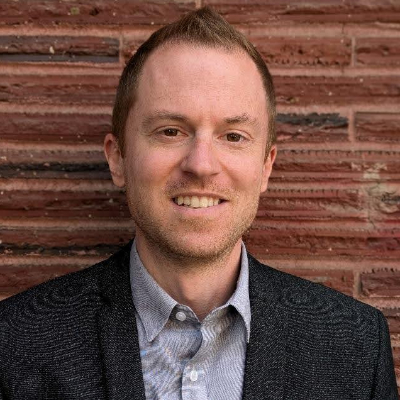
Photo: Chilean poet Carlos Cociña, by Loreto Varas Bordeu.